
Introduction
Choosing the best accounting software for small businesses isn’t about finding one platform that suits everyone. The right solution depends on your business size, growth plans, budget and how you prefer to manage your finances.
For most UK small businesses, Xero, QuickBooks, Sage, FreeAgent and Zoho Books consistently stand out as the strongest cloud accounting platforms. All support HMRC compliance and Making Tax Digital, but each has different strengths.
Xero is our overall recommendation for most growing small businesses. Its intuitive interface, extensive app marketplace, excellent reporting and strong accountant adoption make it a platform that can scale with your business. It is particularly well suited to startups, limited companies and SMEs that expect to grow. Learn more in our Xero Accounting Software Review.
QuickBooks is an excellent choice for sole traders, freelancers and smaller businesses looking for straightforward bookkeeping, automated expense tracking and simple invoicing without a steep learning curve. Read our QuickBooks Accounting Software Review.
Sage remains one of the UK’s most established accounting platforms. Businesses that prioritise traditional accounting workflows, robust financial reporting and long-term compliance often find Sage to be an excellent fit. Read our Sage Accounting Software Review.
FreeAgent is particularly popular with freelancers, contractors and service-based businesses thanks to its clean interface and straightforward approach to invoicing, expenses and tax management. Read our FreeAgent Accounting Software Review.
Zoho Books offers exceptional value for businesses already using the wider Zoho ecosystem. It combines automation, strong workflow management and competitive pricing with excellent integration across Zoho’s business applications. Read our Zoho Books Accounting Software Review.
Rather than focusing solely on price, consider how each platform fits the way your business operates today and where it is likely to be in three to five years. Switching accounting software later can be disruptive, so choosing a scalable solution from the outset often delivers better long-term value.
Contents
- What Defines Quality Accounting Software for Small Businesses
- Why Accounting Software Is Essential for SMEs
- Cloud Accounting Explained for UK Small Businesses
- Core Features to Look for in Small Business Accounting Software
- Compliance, VAT and Making Tax Digital
- Scalability and Long-Term Value
- Best Accounting Software for Small Businesses in 2026
- Xero vs Sage vs QuickBooks
- Pricing, Offers and Value for Money
- Common Mistakes to Avoid When Choosing Accounting Software
- Promotion Conditions and Disclaimers
- Frequently Asked Questions
- Recap
- Conclusion
What Defines Quality Accounting Software for Small Businesses
The best accounting software for small businesses is defined by how effectively it supports day-to-day financial management, not simply by how many features appear on a pricing page. Having reviewed and compared the UK’s leading accounting software platforms, we’ve found that the best small business accounting software consistently combines ease of use, automation, HMRC compliance, scalability and accurate financial reporting. For most UK SMEs, these qualities have a much greater impact on long-term success than simply choosing the cheapest subscription.
Ease of use is critical. Business owners should be able to raise invoices, track expenses, and review financial performance without needing formal accounting training. Clear dashboards, intuitive navigation, and plain-English reporting are essential characteristics of the best small business accounting software.
Automation is another defining feature of the best accounting software for SMEs. Leading cloud accounting software automatically imports bank transactions, reconciles payments, creates recurring invoices, tracks expenses, calculates VAT and produces real-time financial reports. For small businesses, this automation reduces manual errors, saves valuable time and provides better visibility over business performance.
Integration matters as well. The best accounting software for SMEs connects easily with banks, payment providers, payroll systems, and business tools such as CRM or e-commerce platforms. This creates a central financial hub rather than isolated data silos.
Finally, value is not just about price. Affordable monthly fees are important, but long-term value comes from reliability, support, and the ability to scale without switching systems.
Why Accounting Software Is Essential for SMEs
Accounting software has become essential for UK small businesses, regardless of size or industry. Manual bookkeeping methods struggle to keep pace with regulatory requirements and modern business demands.
One of the primary reasons is compliance. HMRC’s Making Tax Digital initiative requires digital record-keeping and online submissions for VAT-registered businesses. The best cloud accounting for small business ensures compliance while minimising administrative burden.
Time efficiency is another key benefit. Automated invoicing, bank feeds, and expense tracking significantly reduce time spent on admin. For SMEs, this often translates into more time focused on growth, customer service, or product development.
Accounting software also improves decision-making. Real-time financial data allows business owners to monitor cash flow, identify trends, and plan confidently. Without accurate, up-to-date figures, even profitable businesses can struggle.
Promotional offers can significantly improve value for money when choosing the best accounting software for small businesses. At the time of writing, eligible new customers can receive 80% off Xero for six months, making one of the UK’s leading accounting platforms considerably more affordable during the initial setup period. Businesses comparing accounting software should always consider both long-term pricing and any introductory offers available.
👉 Claim Xero’s 80% discount here: https://accountingsoftwaredeals.co.uk/recommends/xero-offer/
Cloud Accounting Explained for UK Small Businesses
Cloud accounting refers to software that is accessed online rather than installed on a local computer. In 2026, it is widely considered the standard for UK SMEs.
The best cloud accounting for small business offers flexibility, allowing access from anywhere with an internet connection. This is particularly useful for remote teams and collaboration with accountants.
Cloud platforms update automatically, ensuring compliance with the latest tax rules and security standards. Data is backed up regularly and protected using encryption and access controls.
Compared with traditional desktop software, the best cloud accounting software for small businesses offers greater flexibility, automatic software updates, stronger security and much easier collaboration with accountants. For most UK SMEs, cloud accounting software is now considered the preferred option because it supports remote working, HMRC compliance and future business growth.
👉 Get started with Xero and save 80% for 6 months: https://accountingsoftwaredeals.co.uk/recommends/xero-offer/
Core Features to Look for in Small Business Accounting Software
When evaluating the best small business accounting software, certain features consistently stand out as essential.
Bank feed integration allows transactions to be imported automatically, reducing manual data entry. Invoicing tools should include custom branding, recurring invoices, and payment reminders.
VAT handling is critical for UK businesses. Software should support multiple VAT schemes and integrate directly with HMRC systems. Reporting features should include profit and loss, balance sheets, and cash flow forecasts.
Multi-user access and accountant collaboration are also important for growing SMEs.
Mobile apps have also become an essential feature of the best accounting software for small businesses. Business owners increasingly expect to create invoices, approve expenses, reconcile bank transactions and monitor cash flow from their phone or tablet.
Integrations are equally important. The best small business accounting software connects seamlessly with payroll software, payment gateways, CRM platforms, eCommerce systems and hundreds of third-party business applications, reducing duplicate data entry and improving operational efficiency.
Finally, AI-powered automation is becoming an increasingly important differentiator. Many leading accounting software providers now use artificial intelligence to categorise transactions, identify anomalies, automate reconciliations and generate financial insights, helping small businesses save even more time.
Compliance, VAT and Making Tax Digital
Compliance is a non-negotiable aspect of accounting software selection. UK businesses must meet HMRC requirements for digital record-keeping and submissions.
The best accounting software for SMEs integrates directly with HMRC for VAT returns and supports Making Tax Digital. This reduces errors and ensures timely compliance.
Security also plays a role in compliance. Reputable providers use encryption, secure data centres, and regular audits to protect sensitive financial information.
Scalability and Long-Term Value
Scalability is often overlooked by new businesses but becomes critical as operations grow. The best accounting software for small businesses should adapt as transaction volumes increase and teams expand.
Look for software that allows easy upgrades, additional users, and feature add-ons without disruption. This avoids the cost and risk of migrating systems later.
Long-term value also includes support quality, ecosystem integrations, and ongoing product development.
Best Accounting Software for Small Businesses in 2026
The best accounting software for small businesses in the UK depends on your business size, growth plans and accounting requirements. While there are many accounting software providers available, Xero, QuickBooks, Sage, FreeAgent and Zoho Books consistently rank among the best accounting software for SMEs thanks to their combination of cloud functionality, HMRC compliance, automation and long-term scalability.
Xero is widely used by growing SMEs due to its intuitive interface, strong reporting, and extensive app ecosystem. Sage has a long UK heritage and is popular with established businesses that require more traditional accounting structures. QuickBooks appeals to sole traders and micro-businesses looking for affordability and simplicity.
Each platform supports cloud access, VAT compliance, and collaboration with accountants, but suitability depends on business size and complexity.
Which Accounting Software Is Right For Your Business?
While every business has different requirements, the following recommendations provide a useful starting point.
Choose Xero if:
- You expect your business to grow.
- You want extensive integrations.
- You work closely with an accountant.
- You value modern reporting and automation.
Choose QuickBooks if:
- You’re a sole trader or freelancer.
- You want straightforward bookkeeping.
- Ease of use is your top priority.
Choose Sage if:
- You prefer traditional accounting workflows.
- Your business already uses Sage products.
- Detailed financial reporting is important.
Choose FreeAgent if:
- You’re self-employed or a contractor.
- You need simple invoicing and expense tracking.
- You want an easy-to-manage cloud solution.
Choose Zoho Books if:
- You already use Zoho CRM or other Zoho apps.
- Automation is important.
- You’re looking for excellent value for money.
If you’re still deciding, our detailed comparison guides explain how each platform performs across pricing, features, ease of use, integrations and long-term value.
Pricing, Offers and Value for Money
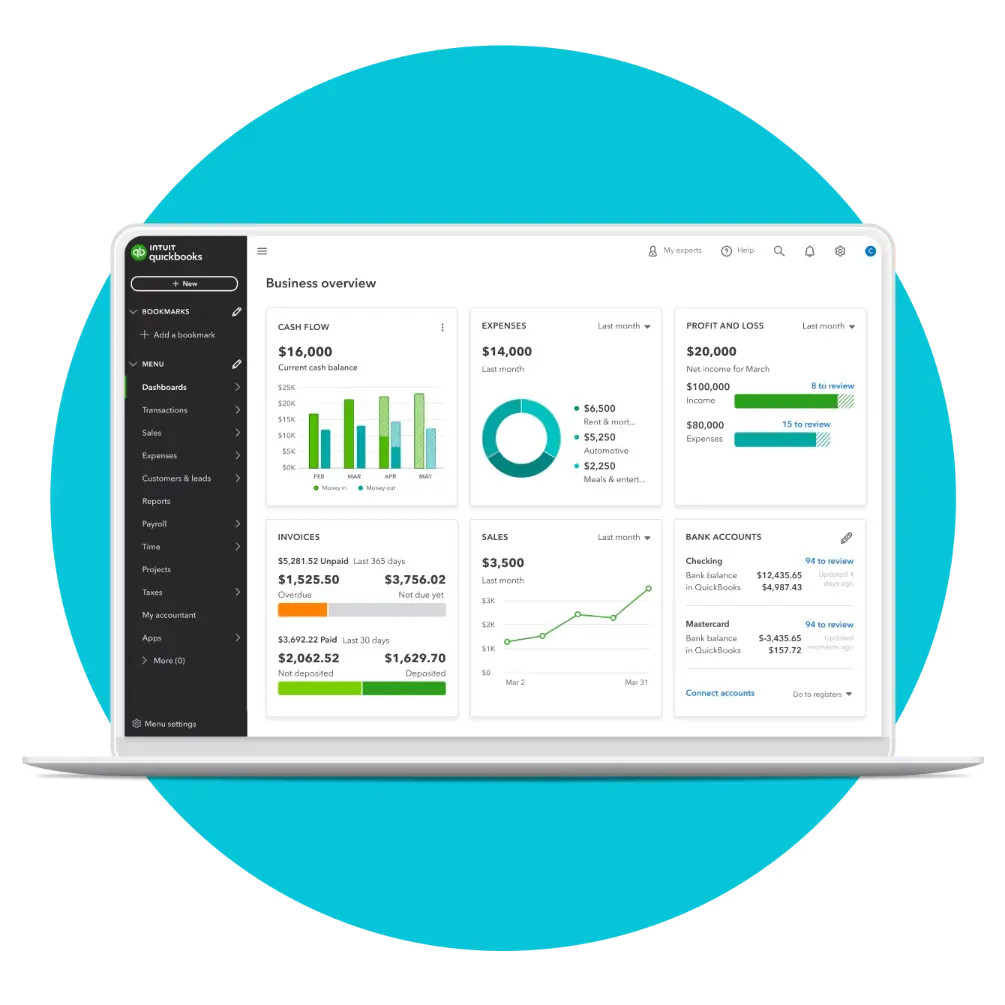
The cheapest accounting software isn’t always the best value. When comparing accounting software for small businesses, it’s important to consider what is included within each subscription, how easily the platform can scale, and whether additional users or features will increase costs over time.
Xero, QuickBooks, Sage, FreeAgent and Zoho Books all offer multiple pricing tiers designed for businesses at different stages of growth. While entry-level plans provide core bookkeeping functionality, higher-tier subscriptions typically include advanced reporting, payroll integrations, inventory management and greater automation.
Introductory offers can make the best accounting software for small businesses significantly more affordable. When comparing accounting software, it’s worth considering both the current promotional discounts and the long-term subscription costs, as the cheapest accounting software is not always the best value over several years.
- Xero – 80% off for 6 months*
- QuickBooks – 90% off for 7 months*
- Sage – 90% off for 6 months
- Zoho Books – $100 Zoho Wallet Credits*
Before choosing a provider, compare both the introductory promotion and the standard monthly subscription cost to understand the long-term value.
Common Mistakes to Avoid When Choosing Accounting Software
One of the most common mistakes when choosing the best accounting software for small businesses is focusing purely on price. While introductory discounts are valuable, the best accounting software for SMEs should ultimately be selected based on usability, automation, accountant compatibility and its ability to support future growth. Switching accounting software later can be time-consuming, disruptive and expensive.
Another issue is failing to consider accountant compatibility. Many UK accountants specialise in specific platforms, which can affect efficiency and support.
Ignoring future growth is also risky. Software that works today may become restrictive as your business expands.
🔗 https://accountingsoftwaredeals.co.uk/recommends/xero-offer/
Expert Tip
If you’re unsure which accounting software to choose, think about where your business will be in three to five years rather than where it is today. Many businesses outgrow entry-level accounting software sooner than expected. Choosing a scalable cloud accounting platform from the outset can reduce migration costs, minimise disruption and provide much better long-term value.
Product Comparison: Xero vs Sage vs QuickBooks
Choosing between Xero, Sage, and QuickBooks can feel challenging for UK sole traders and SMEs, as all three are well-established providers in the accounting software market. Each platform is fully cloud-based and designed to support HMRC compliance, but they differ in approach, usability, and long-term suitability depending on how your business operates and grows.
QuickBooks is often a strong option for sole traders and small limited companies that want guided workflows and clear automation. It is particularly popular with business owners who value straightforward expense tracking, automated transaction categorisation, and simple VAT reporting. QuickBooks works well for businesses that want structure and clear prompts without too much configuration.
Sage tends to appeal to SMEs that prefer a more traditional accounting approach. It offers robust, HMRC-compliant VAT and Making Tax Digital reporting, well-defined bookkeeping processes, and familiar reporting layouts. Sage can be a good fit for established businesses that prioritise compliance, consistency, and more conventional accounting workflows over flexibility.
Xero consistently stands out as the best accounting software for small businesses that expect to grow. Its cloud-first design, intuitive interface, real-time reporting and extensive app marketplace make it suitable for sole traders, limited companies and growing SMEs alike. In our view, Xero strikes the strongest balance between ease of use, automation, accountant collaboration and scalability, making it our overall recommendation for most UK small businesses.
When comparing the best accounting software for small businesses and SMEs, Xero’s balance of usability, scalability, and accountant collaboration often gives it an edge. This is especially relevant for businesses planning to grow, add users, or work closely with an external accountant. When combined with its current 80% off for 6 months offer, it also presents a lower-cost entry point for businesses setting up or switching software, subject to eligibility and current terms.
- ✓Automated transaction categorisation for MTD-ready bookkeeping
- ✓VAT tracking and making tax digital submissions to HMRC
- ✓MTD-aligned reporting to support quarterly updates
- ✓Custom invoicing with payment tracking
- ✓Receipt capture and expense tracking
- ✓Secure bank feeds for real-time records
- ✓MTD-ready bookkeeping with automated bank reconciliation
- ✓VAT tracking and digital submissions built for UK businesses
- ✓Real-time dashboards for quarterly performance visibility
- ✓Multi-user access for accountants and teams
- ✓Receipt capture to strengthen digital audit trails
- ✓Integrations designed to keep MTD compliance simple
- ✓HMRC-compliant VAT and MTD reporting tools
- ✓Structured bookkeeping aligned to UK standards
- ✓Clear reporting for MTD-style quarterly updates
- ✓Invoice and credit control for cash flow
- ✓Director-friendly monthly reporting
- ✓Cloud and desktop access options
- ✓MTD-ready VAT workflows for compliant submissions
- ✓Digital record keeping for making tax digital
- ✓Automated invoicing and payment tracking
- ✓Bank feeds and reconciliation to reduce admin
- ✓Works well with other Zoho business apps
- ✓$100 credits usable across the Zoho ecosystem
Continue Your Research
Choosing the best accounting software for a small business often comes down to comparing two providers directly.
Our in-depth comparison guides include detailed reviews of pricing, features, integrations, ease of use, Making Tax Digital compliance and which businesses each platform suits best.
Continue your research:
You can also read our full provider reviews:
Promotion Conditions and Disclaimers
The Xero promotion referenced in this guide provides eligible new customers with 80% off their subscription fees for the first six months. This offer is available to new Xero customers only and cannot usually be applied to existing accounts or previous subscribers.
Terms and conditions apply, and eligibility criteria may vary depending on business type, location, and subscription plan selected. The discount is applied for the promotional period only, after which standard pricing will apply unless the subscription is changed or cancelled.
Promotional offers, pricing, and availability are subject to change at any time. We strongly recommend reviewing the most up-to-date offer details, full terms, and conditions directly on Xero’s website before signing up to ensure the promotion is still valid and suitable for your business.
Accounting software pricing and features may also change over time, so businesses should regularly review their subscription to ensure it continues to meet their needs.

FAQs: Best Accounting Software for Small Businesses
What is the best accounting software for small businesses in the UK?
The best accounting software for small businesses depends on your size, structure, and needs. For most UK sole traders and SMEs, cloud-based platforms such as Xero, Sage, and QuickBooks consistently rank highest. They offer automation, HMRC compliance, and real-time reporting. Businesses that want scalability and strong integrations often lean towards Xero, while simpler setups may prefer QuickBooks. Established SMEs sometimes choose Sage for its traditional accounting depth.
What is the best small business accounting software for sole traders?
Sole traders typically benefit from accounting software that is simple, affordable, and compliant with HMRC. The best small business accounting software for sole traders includes tools for invoicing, expense tracking, and self-assessment reporting. QuickBooks and Xero are both popular choices, with Xero offering additional scalability if the business later becomes a limited company.
Is cloud accounting safe for small businesses?
Yes, modern cloud accounting platforms are highly secure and often considered the best accounting software for smes. The best cloud accounting for small business uses encryption, secure data centres, and multi-factor authentication to protect sensitive financial data. In many cases, cloud systems are safer than spreadsheets or desktop software, which rely on local backups and manual security processes.
What is the best accounting software for SMEs that are growing?
For growing businesses, the best accounting software for SMEs is one that scales without disruption. This includes support for multiple users, advanced reporting, VAT handling, and integrations with payroll, inventory, and payment platforms. Many UK SMEs choose Xero because it offers flexible plans, extensive app integrations, and strong collaboration tools for accountants and finance teams.
What is the difference between small business and SME accounting software?
In practice, there is significant overlap. Small business accounting software often focuses on simplicity, basic invoicing, and expense tracking. SME accounting software typically adds more advanced reporting, user permissions, and scalability. The best accounting software for small businesses usually evolves into the best SME accounting software as the business grows, which is why choosing a scalable platform from the start is important.
Is cloud accounting better than desktop accounting for small businesses?
Cloud accounting is generally considered the best accounting software for small businesses. The best cloud accounting for small business allows access from anywhere, automatic updates, real-time data, and easier collaboration with accountants. Desktop software may still suit niche cases, but for flexibility and compliance, cloud-based platforms are usually the better option.
What accounting software do most UK accountants recommend?
Many UK accountants recommend widely adopted platforms because they are familiar, reliable, and efficient. Xero, Sage, and QuickBooks are the most commonly supported systems. Choosing software your accountant already uses can save time, reduce costs, and improve accuracy.
What is the best accounting software for VAT-registered small businesses?
VAT-registered businesses should prioritise software that handles VAT accurately and integrates directly with HMRC. The best accounting software for small businesses will support multiple VAT schemes, automate calculations, and submit returns digitally. All leading UK cloud platforms now meet Making Tax Digital requirements.
Can accounting software replace an accountant?
Accounting software does not replace an accountant, but it significantly reduces manual work. The best small business accounting software automates data entry and reporting, while accountants provide strategic advice, tax planning, and compliance support. Used together, they are far more effective than either alone.
What is the best accounting software for SMEs with multiple users?
SMEs with teams need software that supports multiple users with permission controls. The best accounting software for SMEs allows business owners, finance staff, and accountants to work in the same system securely. This improves efficiency and reduces errors caused by duplicated or outdated data.
How much does small business accounting software cost in the UK?
Pricing varies depending on features and business size. Entry-level plans typically start between £12 and £15 per month, with higher tiers adding advanced functionality. The best accounting software for small businesses often offers introductory discounts, which can significantly reduce costs during the first few months.
Is the Xero 80% off for 6 months offer worth it?
For eligible new customers, the Xero promotion offering 80% off for six months can provide excellent value. It allows small businesses to access a full-featured accounting platform at a reduced cost while setting up systems properly. As with all promotions, it is subject to eligibility and current terms, so businesses should check the latest conditions before signing up.
Do I need a promo code to access accounting software offers?
In most cases, no separate promo code is required. Offers are typically applied automatically when signing up through a dedicated referral or partner link. This applies to many deals available on accounting software platforms, including introductory discounts.
What happens after an accounting software promotion ends?
Once a promotional period ends, standard pricing applies. Businesses can usually change plans, downgrade, or cancel if the software no longer suits their needs. Understanding long-term pricing is important when evaluating the best accounting software for small businesses.
Is accounting software tax-deductible for UK small businesses?
In most cases, accounting software costs are allowable business expenses for UK small businesses and SMEs. This means they can usually be deducted when calculating taxable profits. Always confirm with your accountant, as individual circumstances can vary.
Recap
Choosing the best accounting software for small businesses in 2026 is about far more than ticking feature boxes. UK sole traders and SMEs need software that simplifies compliance, reduces admin, and provides real-time financial insight. Cloud-based platforms have become the standard because they support flexible working, automation, and Making Tax Digital requirements.
Throughout this guide, we have explored what defines quality accounting software, why cloud accounting dominates the SME market, and which features matter most at different stages of business growth. We have also compared the leading platforms used by UK businesses, highlighting how Xero, Sage, and QuickBooks each serve different needs.
For many businesses, the best small business accounting software is one that can grow with them, integrate with other tools, and remain easy to use as complexity increases. Cost matters, but long-term value, scalability, and accountant compatibility matter more.
If you are actively comparing options, it is worth factoring in current promotions, as these can significantly reduce costs during setup and early use, while still giving access to full functionality.
Conclusion
Choosing the best accounting software for small businesses is about selecting a platform that supports your business both today and as it grows. The right software should simplify bookkeeping, help you stay compliant with HMRC, improve financial visibility and reduce the amount of time spent on administration.
While every business has different requirements, Xero remains our overall recommendation for most UK small businesses thanks to its balance of usability, automation, integrations and scalability. QuickBooks, Sage, FreeAgent and Zoho Books are all excellent alternatives depending on your business model, budget and preferred way of working.
For UK sole traders and SMEs, Xero, Sage, and QuickBooks remain the most trusted options, each suited to different business sizes and levels of complexity. If your priority is ease of use, strong integrations, and room to grow, Xero is often a compelling choice for small and medium-sized businesses.
At the time of writing, eligible new customers can access Xero with 80% off for six months, subject to current terms and conditions. This can make it significantly easier to set up robust accounting processes without a high upfront cost.
👉 Get 80% off Xero for 6 months today: https://accountingsoftwaredeals.co.uk/recommends/xero-offer/
Before making your final decision, compare features, pricing, integrations and current introductory offers carefully. We recommend choosing accounting software that not only meets your current requirements but also supports the future growth of your business. For most UK small businesses, Xero remains our overall recommendation, but QuickBooks, Sage, FreeAgent and Zoho Books are all excellent choices depending on your priorities and preferred way of working.
Subject to eligibility; offers may change. Always review current terms and conditions before subscribing.
Disclaimer: The content on this website is intended for informational purposes only and should not be construed as legal, financial, or professional advice. While we strive to ensure that the information is accurate and up-to-date at the time of publication, please be aware that regulations and circumstances may change. We recommend consulting with a qualified professional for personalised guidance specific to your situation. Additionally, some links on this website may be affiliate links, meaning we may earn a commission if you make a purchase through those links. Please ensure you read and understand all terms and conditions before making any decisions.
Xero Relationship Disclosure: This website is independent and not affiliated with or endorsed by Xero. We may earn a commission if you sign up to Xero via our referral links.
- Xero vs Sage: Which Accounting Software Is Best for Small Businesses?
 Introduction Choosing between Xero vs Sage is one of the biggest decisions UK business owners make when selecting accounting software. Whether you’re comparing Xero or Sage, looking at Xero vs Sage features, or wondering is Xero better than Sage or is Sage better than Xero, this guide compares pricing, ease of use, HMRC compliance, integrations… Read more: Xero vs Sage: Which Accounting Software Is Best for Small Businesses?
 - Free Agent Accounting Software Review
 Introduction Choosing the right accounting software can save you hours of administration each month while helping you stay compliant with HMRC requirements. For UK freelancers, sole traders and small businesses, FreeAgent accounting software has become one of the most popular cloud accounting solutions thanks to its simple interface, built-in tax features and time-saving automation. In… Read more: Free Agent Accounting Software Review
 - Zoho Books Accounting Software Review UK (2026)
 Introduction Choosing the right accounting software is one of the most important decisions for any business, and Zoho Books accounting software has become an increasingly popular choice for freelancers, sole traders, startups and small businesses looking for an affordable cloud-based solution. Combining invoicing, bookkeeping, expense tracking, automation and HMRC-compliant tax tools, Zoho Books is designed… Read more: Zoho Books Accounting Software Review UK (2026)
 - Xero vs Zoho Books for Small Businesses (2026)
 Introduction Choosing accounting software is one of the most important decisions a sole trader or small business owner can make. The right platform saves time, reduces stress around tax, and gives you clearer insight into cash flow and profitability. The wrong one can feel restrictive, confusing, or unnecessarily expensive as your business grows. That’s why… Read more: Xero vs Zoho Books for Small Businesses (2026)
 - Zoho Books vs Sage for Small Businesses (2026 Comparison Guide)
 Introduction Choosing the right accounting software is one of the most important decisions for any UK sole trader or small business. The right platform can save hours of administration every month, simplify VAT returns, improve cash flow management and provide better visibility over your finances as your business grows. If you’re comparing Zoho Books vs… Read more: Zoho Books vs Sage for Small Businesses (2026 Comparison Guide)
 - Sage vs QuickBooks Accounting Software Comparison
 Introduction Choosing between Sage and QuickBooks is one of the most important software decisions facing UK sole traders and small businesses. Both platforms are HMRC-recognised, Making Tax Digital (MTD) compliant and trusted by thousands of UK businesses, but they take noticeably different approaches to bookkeeping, automation and financial management. Sage has traditionally been the preferred… Read more: Sage vs QuickBooks Accounting Software Comparison