
Introduction
Choosing the right accounting software for startups is one of the most important decisions founders make in the early stages of building a business. While product development, customer acquisition and funding often dominate attention, poor financial systems can quietly undermine even the most promising startup.
In 2026, accounting for new businesses is no longer just about recording income and expenses. Startups must navigate Making Tax Digital requirements, VAT registration thresholds, payroll obligations, real-time cash flow management, and increasingly complex reporting needs – often with limited internal finance expertise. The right software does not just keep you compliant; it becomes a strategic tool that supports decision-making, investor confidence, and scalable growth.
Modern startup bookkeeping tools have evolved significantly. Cloud-based platforms now automate bank feeds, reconcile transactions in real time, generate management reports instantly, and integrate seamlessly with payment platforms, ecommerce tools and CRM systems. For early stage business accounting, this automation is essential. Founders need clarity without complexity, insight without spreadsheets, and systems that grow with them rather than needing replacement after year one.
This guide takes a practical, UK-focused look at what makes the best startup accounting software in 2026. We break down the core features startups should prioritise, common mistakes to avoid, and how different business models affect software choice. We then compare the three most widely used platforms by UK startups – Xero, Sage and QuickBooks – highlighting strengths, limitations and pricing considerations.
Throughout this guide you’ll find practical comparisons, expert recommendations and links to the latest accounting software deals, helping you choose accounting software that supports your startup today and as it grows: https://accountingsoftwaredeals.co.uk/recommends/xero-offer/
Contents
- What is accounting software for startups?
- Why startups need specialist accounting software
- Key features startups should look for
- Accounting software vs spreadsheets for startups
- Early stage business accounting challenges
- Scalability and growth planning
- Cloud accounting and UK compliance
- Xero vs Sage vs QuickBooks comparison
- Promotion conditions and offer details
- Frequently asked questions
- Recap
- Conclusion
What is accounting software for startups?
Accounting software for startups refers to digital platforms designed to manage, automate and report on a company’s financial activity from day one. Unlike enterprise finance systems or basic consumer tools, startup-focused solutions balance simplicity with scalability, supporting businesses through their earliest transactions and into growth stages.
At its core, accounting for new businesses includes recording income and expenses, managing invoices, reconciling bank transactions, and preparing financial statements. However, modern startup bookkeeping tools go far beyond this baseline. They provide real-time visibility into cash flow, automate VAT calculations, generate profit and loss reports instantly, and integrate with the tools startups already use, such as ecommerce platforms, payment gateways and payroll software.
For early stage business accounting, accuracy and consistency are critical. Startups often operate with lean teams and limited financial oversight. Accounting software reduces the risk of human error by automating data capture and enforcing structured workflows. This is particularly important when preparing accounts for accountants, tax submissions, or potential investors.
Another defining characteristic is flexibility. Startups frequently pivot, change pricing models, expand into new markets, or add new revenue streams. The best startup accounting software adapts to these changes without requiring costly migrations or complex reconfiguration.
Ultimately, accounting software for startups acts as a financial operating system. It ensures compliance, supports informed decision-making, and creates a reliable financial history that strengthens credibility with banks, investors and partners.
Why Cloud Accounting Is the Best Choice for Startups
Cloud accounting software has become the standard for UK startups because it provides flexibility, automation and real-time financial visibility from day one. Unlike desktop software or spreadsheets, cloud accounting platforms allow founders to access financial information securely from anywhere while collaborating easily with accountants, investors and business partners.
Automated bank feeds, receipt capture, invoicing and reporting reduce administration while improving accuracy. As startups grow, cloud accounting software also scales far more easily than manual bookkeeping systems, making it a long-term investment rather than a temporary solution.
Why startups need specialist accounting software
Startups face financial challenges that differ significantly from established businesses. Unpredictable cash flow, rapid growth, funding rounds, and evolving cost structures all require more than basic bookkeeping.
One of the biggest reasons startups need specialist accounting software is time efficiency. Founders should be focused on product, customers and growth, not manual data entry. Automation features such as bank feeds, invoice matching and recurring transactions dramatically reduce admin time.
Compliance is another major driver. UK startups must adhere to HMRC requirements, including Making Tax Digital for VAT and, soon, Income Tax. Purpose-built accounting software ensures submissions are formatted correctly and deadlines are tracked automatically.
Visibility is equally important. Early stage business accounting is about understanding runway, burn rate and profitability trends. Without real-time reporting, founders may make decisions based on outdated or incomplete information. Modern accounting platforms provide dashboards that surface key metrics instantly.
Finally, professional credibility matters. Investors, lenders and partners expect clean, well-structured financial records. Using recognised startup bookkeeping tools signals operational maturity and reduces friction during due diligence.
Key features startups should look for
The best startup accounting software shares a set of core features that support both compliance and growth. While exact needs vary by business model, most startups should prioritise the following.
Automated bank feeds are essential. These connect directly to UK business bank accounts, importing transactions daily and reducing manual reconciliation. This improves accuracy and keeps records up to date.
Invoicing and payment tracking is another key area. Startups need professional invoices, automated reminders, and clear visibility into outstanding payments to protect cash flow.
VAT management is critical for accounting for new businesses approaching or exceeding the VAT threshold. Software should calculate VAT automatically, support different schemes, and submit returns directly to HMRC.
Reporting capabilities distinguish basic tools from true startup solutions. Profit and loss statements, balance sheets, cash flow forecasts and management reports should be accessible without accounting expertise.
Integration capability matters. Startups rarely operate in isolation. The ability to connect accounting software with payroll, ecommerce platforms, expense tools and CRM systems ensures data consistency across the business.
Finally, mobile access is another increasingly important feature. Startup founders rarely spend all day in the office, so being able to send invoices, approve expenses, monitor cash flow and review financial reports from a smartphone or tablet provides valuable flexibility without compromising visibility.
👉 Get started with Xero and save 80% for 6 months: https://accountingsoftwaredeals.co.uk/recommends/xero-offer/
Accounting software vs spreadsheets for startups
Many startups begin with spreadsheets due to familiarity and low upfront cost. However, spreadsheets quickly become a liability as transaction volume increases.
Manual data entry increases the risk of errors, version control issues, and inconsistencies. Spreadsheets also lack audit trails, making compliance and due diligence more difficult.
In contrast, accounting software for startups enforces structured data entry, automates calculations, and maintains a clear transaction history. Real-time updates mean founders always see the current financial position.
While spreadsheets may suffice briefly, they rarely support scalable early stage business accounting. Migrating to software early reduces disruption and sets a strong foundation for growth.
Early stage business accounting challenges
Startups commonly face a unique mix of accounting challenges. Irregular income, upfront costs, and uncertain timelines make forecasting difficult. Limited finance expertise can lead to misclassification of expenses or missed deadlines.
Another challenge is separating personal and business finances, particularly for founders transitioning from self-employment. Proper accounting software enforces this separation, reducing risk and simplifying reporting.
Funding events introduce additional complexity. Tracking investment, equity and runway requires accurate records and clear reporting structures.
Startup bookkeeping tools address these challenges by standardising processes, providing guidance through built-in prompts, and enabling collaboration with accountants or advisors.
You can view the current Xero offer here: https://accountingsoftwaredeals.co.uk/recommends/xero-offer/
Common Accounting Mistakes Startups Make
Many startups delay implementing accounting software until bookkeeping becomes difficult. Unfortunately, this often creates unnecessary work and increases the risk of inaccurate financial records.
Common mistakes include mixing personal and business finances, relying on spreadsheets for too long, failing to reconcile bank transactions regularly and waiting until VAT registration before introducing proper accounting systems.
Implementing cloud accounting software early helps establish consistent financial processes from the beginning, making future growth significantly easier to manage.
Scalability and growth planning
One of the biggest mistakes startups make is choosing accounting software based solely on today’s requirements. While a simple bookkeeping tool may appear sufficient initially, growing businesses quickly require features such as payroll, VAT management, multi-user access, forecasting and integrations. Choosing scalable accounting software from the outset reduces disruption and avoids costly migrations later.
Scalable software offers tiered plans, modular features and integration options that grow with your needs. This avoids costly system changes that disrupt operations.
Growth planning also depends on data quality. Accurate historical data supports forecasting, budgeting and scenario modelling. Investors expect this level of financial insight.
The best startup accounting software balances simplicity for day-to-day use with depth for strategic planning.
Cloud accounting and UK compliance
Cloud-based accounting has become the standard for startups in the UK. It enables access from anywhere, automatic updates, and secure data storage.
From a compliance perspective, cloud accounting software helps startups maintain digital financial records while supporting VAT submissions and wider HMRC requirements. As Making Tax Digital continues to expand, adopting compliant software early reduces future disruption and helps businesses remain prepared for changing regulations.
Cloud accounting also facilitates collaboration. Accountants, bookkeepers and founders can access the same data in real time, reducing delays and miscommunication.
Security is another consideration. Leading platforms invest heavily in encryption, backups and compliance certifications, often exceeding what small businesses can manage independently.
Cloud accounting also provides a stronger foundation for future growth. As your startup hires employees, expands into new markets or introduces additional products and services, cloud accounting software allows new functionality to be added without replacing your existing financial system.
Xero vs Sage vs QuickBooks comparison
In 2026, three platforms dominate the UK startup market due to their balance of usability, compliance and scalability: Xero, Sage and QuickBooks.
Xero is widely regarded as the most startup-friendly platform. Its intuitive interface, strong automation and extensive integration ecosystem make it a popular choice for early stage business accounting.
Sage offers robust compliance features and is often favoured by startups that prioritise UK-specific reporting and payroll integration.
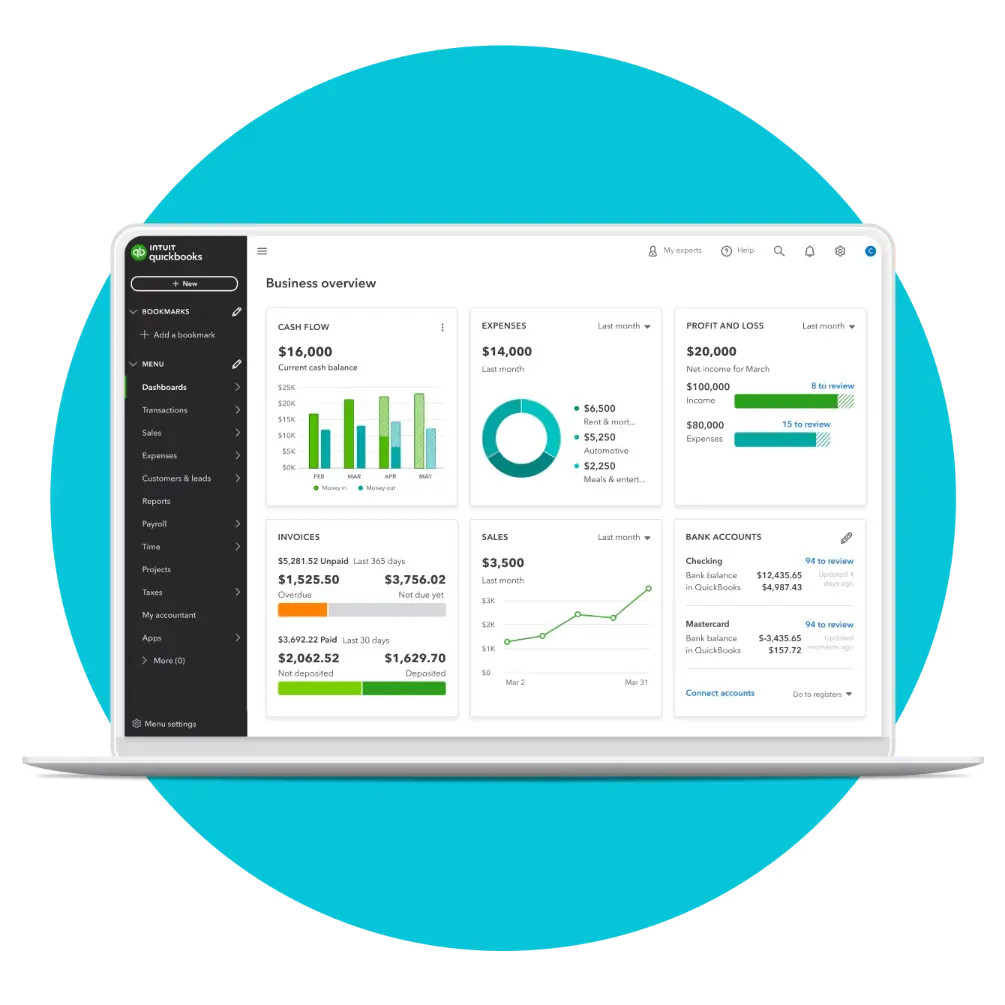
QuickBooks appeals to startups seeking strong expense tracking and cash flow tools, particularly those with higher transaction volumes.
For many startups, Xero stands out due to its balance of simplicity and power, especially when combined with the current 80% off for 6 months offer.
- ✓Cash flow management
- ✓Startup expense tracking
- ✓Automated invoicing
- ✓Bank reconciliation
- ✓Reporting dashboards
- ✓Payroll integration
- ✓Unlimited integrations
- ✓Startup-friendly automation
- ✓Multi-user collaboration
- ✓Real-time dashboards
- ✓Bank feeds
- ✓Scalable cloud accounting
- ✓UK compliance
- ✓Payroll
- ✓VAT management
- ✓Financial reporting
- ✓Business insights
- ✓Cloud accounting
- ✓Excellent value
- ✓Workflow automation
- ✓Customer invoicing
- ✓Expense management
- ✓Bank reconciliation
- ✓$100 credits usable across the Zoho ecosystem
Which Accounting Software Is Right for Your Startup?
Every startup has different priorities depending on its industry, funding stage and future plans. While all of the leading accounting software platforms provide strong bookkeeping capabilities, each has particular strengths.
Choose Xero if:
- You expect rapid growth.
- You want excellent automation.
- You work closely with an accountant.
- You need the largest integration ecosystem.
Choose Sage if:
- UK compliance is your highest priority.
- You already use Sage products.
- You want strong payroll integration.
Choose QuickBooks if:
- Cash flow reporting is important.
- You want simple bookkeeping.
- You need strong expense management.
Choose Zoho Books if:
- You already use Zoho applications.
- You want excellent value.
- Automation is a priority.
Expert Tip
Many startups focus heavily on introductory pricing when comparing accounting software. While discounts can reduce costs during the early stages, choosing software that supports your business as it grows will usually provide greater long-term value than selecting the cheapest option available today.
Continue Your Research
- Best Accounting Software UK
- Best Accounting Software for Small Businesses
- Best Accounting Software for Sole Traders
- Best Accounting Software for Limited Companies
- Accounting Software for Self-Employed
- Xero Review
- Sage Review
- QuickBooks Review
- FreeAgent Review
- Zoho Books Review
- Xero vs Sage
- Xero vs QuickBooks
- Sage vs QuickBooks
- Xero vs Zoho Books
- Zoho Books vs Sage
Exclusive Xero Offer for Startups | Save 80% for 6 Months*
Choosing accounting software for startups often comes down to balancing cost, functionality and long-term scalability. To support early stage business accounting, many providers introduce introductory discounts designed to reduce upfront costs while founders get systems in place. One of the strongest offers currently available in the UK market is from Xero.
Through our partner link, eligible startups can access Xero accounting software with 80% off for the first 6 months. This significantly lowers the barrier to entry for startups that want professional-grade startup bookkeeping tools without committing to full pricing from day one.
The promotion typically applies to new Xero customers only and is limited to core subscription plans. Add-ons such as payroll, advanced reporting or third-party integrations may be charged separately at standard rates. After the initial six-month period, subscriptions usually renew at Xero’s standard pricing unless cancelled or changed.
This type of offer is particularly valuable for accounting for new businesses, as it allows founders to:
- Set up compliant accounting systems from day one
- Test workflows before scaling
- Collaborate with accountants or advisors early
- Avoid costly migrations later
As with all software promotions, terms and conditions apply, and eligibility requirements can change. Pricing, plan availability and renewal costs are subject to change, so startups should always review the most up-to-date details before subscribing.
View today’s Xero offer here: https://accountingsoftwaredeals.co.uk/recommends/xero-offer/
Subject to eligibility; offers may change.

Working with an Accountant as Your Startup Grows
Most startups eventually work with an accountant, whether for year-end accounts, tax planning or strategic financial advice. Choosing accounting software that your accountant already supports can simplify collaboration, reduce administration and improve the quality of financial reporting. Cloud accounting platforms allow both parties to work from the same live financial data, helping identify issues earlier and making year-end processes more efficient.
This mirrors one of the strongest sections from your Limited Companies guide and reinforces accountant collaboration – a recurring theme across your site.
Frequently Asked Questions: Accounting Software for Startups
What is the best accounting software for startups in the UK?
The best startup accounting software depends on your business model, growth plans and reporting needs. Platforms like Xero, Sage and QuickBooks are widely used because they support early stage business accounting, UK tax compliance and scalability. Xero is often favoured by startups due to its intuitive interface, automation features and strong integration ecosystem.
Do startups legally need accounting software?
UK startups are not legally required to use specific software, but accounting for new businesses must comply with HMRC rules. With Making Tax Digital requirements, using cloud-based accounting software for startups is effectively essential to submit VAT returns correctly and maintain compliant digital records.
When should a startup start using accounting software?
Ideally, startups should implement accounting software from day one. Early adoption helps establish clean financial records, simplifies bookkeeping, and avoids the risks and costs of migrating data later. Startup bookkeeping tools are most effective when used consistently from the beginning.
Is accounting software suitable for pre-revenue startups?
Yes. Even pre-revenue startups benefit from accounting software for startups because it tracks expenses, funding, runway and cash flow. Early stage business accounting is about understanding burn rate and financial position, not just income.
Can accounting software replace an accountant?
Accounting software automates bookkeeping and reporting, but it does not replace professional advice. Many startups use software alongside an accountant to ensure tax efficiency, compliance and strategic financial planning.
How does accounting software help with funding rounds?
Investors expect accurate, well-organised financial data. Using professional accounting software for startups ensures consistent reporting, clear audit trails and reliable financial statements, all of which support due diligence and investor confidence.
What features matter most for early stage business accounting?
Key features include automated bank feeds, invoicing, VAT tracking, reporting dashboards and integration with other tools. The best startup accounting software reduces manual admin and provides real-time insight into business performance.
Is cloud accounting safe for startups?
Yes. Leading providers invest heavily in data security, encryption and backups. For most startups, cloud accounting platforms are significantly more secure than spreadsheets or local files.
Can accounting software scale as my startup grows?
Scalability is one of the main benefits of modern startup bookkeeping tools. Platforms like Xero, Sage and QuickBooks offer tiered plans and integrations that grow with your business, supporting payroll, VAT, multi-currency and advanced reporting.
Does accounting software support Making Tax Digital?
Yes. UK-compliant accounting software for startups is designed to meet Making Tax Digital requirements, including digital record keeping and electronic submission of VAT returns to HMRC.
What are the risks of using spreadsheets instead?
Spreadsheets increase the risk of errors, lack audit trails and do not integrate with HMRC systems. For accounting for new businesses, spreadsheets often become unmanageable as transaction volumes grow.
Are discounts like 80% off worth using?
Introductory discounts can be extremely valuable for startups managing costs. They allow businesses to access professional accounting software for startups at a reduced rate while establishing systems and processes.
Which accounting software is easiest for startups?
Xero, QuickBooks and FreeAgent are all suitable for startups because they automate bookkeeping, simplify invoicing and provide real-time financial reporting. The best choice depends on your expected growth, budget and the features you’ll need as your business develops.
Can startups change accounting software later?
Yes, although migrating accounting data can take time. Choosing scalable accounting software from the beginning often avoids unnecessary disruption as your business grows.
What accounting software do investors prefer startups to use?
Many investors do not require a specific accounting platform, but they do expect accurate, well-organised financial records. Cloud accounting software such as Xero, Sage and QuickBooks provides reliable reporting, audit trails and financial statements that support investment discussions and due diligence.
Can accounting software integrate with other startup tools?
Yes. Most modern accounting software integrates with payroll systems, payment gateways, ecommerce platforms, CRM software and expense management tools. These integrations reduce manual administration and provide a more complete view of your business finances.
Recap:
Selecting the right accounting software for startups is not simply a compliance decision – it is a foundational business choice that directly impacts clarity, control and confidence from day one. In the earliest phases of building a company, founders are often juggling product development, customer acquisition, funding and operations simultaneously. Without reliable financial systems, early stage business accounting quickly becomes reactive rather than strategic.
Modern accounting for new businesses requires more than tracking income and expenses. Startups need visibility into cash flow, the ability to forecast runway, and confidence that VAT, payroll and tax obligations are being handled correctly. This is where purpose-built startup bookkeeping tools deliver real value. By automating routine tasks and standardising financial data, accounting software frees founders to focus on growth while maintaining financial discipline.
The best startup accounting software supports businesses as they evolve. What works for a pre-revenue startup must also adapt when revenue increases, staff are hired, VAT registration becomes necessary, or external funding is introduced. Cloud-based platforms such as Xero, Sage and QuickBooks are widely adopted because they offer this balance of simplicity and scalability.
Among these options, Xero is often favoured by startups due to its intuitive interface, real-time reporting and extensive integration ecosystem. For founders prioritising speed, accuracy and flexibility in early stage business accounting, this combination is particularly compelling. When paired with a reduced-cost entry point, it allows startups to build robust financial systems without placing unnecessary strain on budgets.
Ultimately, accounting software for startups is not just about staying compliant – it is about creating a clear financial narrative that supports smarter decisions, stronger credibility and sustainable growth.
For most UK startups, Xero remains our overall recommendation because it combines excellent automation, strong accountant collaboration, extensive integrations and the flexibility to grow alongside your business.
Conclusion: Take Control with the Right Accounting Software for Startups
Strong financial foundations are one of the clearest predictors of startup longevity. While many early decisions can be changed or refined, accounting systems underpin every stage of a business’s journey. Choosing the right accounting software for startups early helps avoid costly mistakes, reduces operational friction and ensures founders always understand their financial position.
In 2026, accounting for new businesses is increasingly digital, regulated and data-driven. Relying on spreadsheets or disconnected tools creates unnecessary risk, particularly as compliance requirements tighten and expectations from investors and lenders increase. Purpose-built startup bookkeeping tools provide structure, automation and transparency – all essential for early stage business accounting.
The best startup accounting software does more than record transactions. It supports planning, highlights risks early, and provides the insights founders need to grow with confidence. While Sage and QuickBooks remain strong contenders for certain business types, Xero continues to stand out for startups that value usability, scalability and integration flexibility.
For startups looking to implement professional accounting systems without committing to full pricing immediately, the current 80% off Xero for 6 months offer provides a practical and low-risk entry point. It enables founders to establish compliant, scalable financial processes from day one, while keeping costs firmly under control.
Ready to get started? Compare today’s pricing and view the latest Xero offer before choosing the accounting software that’s right for your startup: https://accountingsoftwaredeals.co.uk/recommends/xero-offer/
Subject to eligibility; offers may change. Always review current terms and conditions before subscribing.
Disclaimer: The content on this website is intended for informational purposes only and should not be construed as legal, financial, or professional advice. While we strive to ensure that the information is accurate and up-to-date at the time of publication, please be aware that regulations and circumstances may change. We recommend consulting with a qualified professional for personalised guidance specific to your situation. Additionally, some links on this website may be affiliate links, meaning we may earn a commission if you make a purchase through those links. Please ensure you read and understand all terms and conditions before making any decisions.
Xero Relationship Disclosure: This website is independent and not affiliated with or endorsed by Xero. We may earn a commission if you sign up to Xero via our referral links.
- Xero vs Sage: Which Accounting Software Is Best for Small Businesses?
 Introduction Choosing between Xero vs Sage is one of the biggest decisions UK business owners make when selecting accounting software. Whether you’re comparing Xero or Sage, looking at Xero vs Sage features, or wondering is Xero better than Sage or is Sage better than Xero, this guide compares pricing, ease of use, HMRC compliance, integrations… Read more: Xero vs Sage: Which Accounting Software Is Best for Small Businesses?
 - Free Agent Accounting Software Review
 Introduction Choosing the right accounting software can save you hours of administration each month while helping you stay compliant with HMRC requirements. For UK freelancers, sole traders and small businesses, FreeAgent accounting software has become one of the most popular cloud accounting solutions thanks to its simple interface, built-in tax features and time-saving automation. In… Read more: Free Agent Accounting Software Review
 - Zoho Books Accounting Software Review UK (2026)
 Introduction Choosing the right accounting software is one of the most important decisions for any business, and Zoho Books accounting software has become an increasingly popular choice for freelancers, sole traders, startups and small businesses looking for an affordable cloud-based solution. Combining invoicing, bookkeeping, expense tracking, automation and HMRC-compliant tax tools, Zoho Books is designed… Read more: Zoho Books Accounting Software Review UK (2026)
 - Xero vs Zoho Books for Small Businesses (2026)
 Introduction Choosing accounting software is one of the most important decisions a sole trader or small business owner can make. The right platform saves time, reduces stress around tax, and gives you clearer insight into cash flow and profitability. The wrong one can feel restrictive, confusing, or unnecessarily expensive as your business grows. That’s why… Read more: Xero vs Zoho Books for Small Businesses (2026)
 - Zoho Books vs Sage for Small Businesses (2026 Comparison Guide)
 Introduction Choosing the right accounting software is one of the most important decisions for any UK sole trader or small business. The right platform can save hours of administration every month, simplify VAT returns, improve cash flow management and provide better visibility over your finances as your business grows. If you’re comparing Zoho Books vs… Read more: Zoho Books vs Sage for Small Businesses (2026 Comparison Guide)
 - Sage vs QuickBooks Accounting Software Comparison
 Introduction Choosing between Sage and QuickBooks is one of the most important software decisions facing UK sole traders and small businesses. Both platforms are HMRC-recognised, Making Tax Digital (MTD) compliant and trusted by thousands of UK businesses, but they take noticeably different approaches to bookkeeping, automation and financial management. Sage has traditionally been the preferred… Read more: Sage vs QuickBooks Accounting Software Comparison