
Introduction
Choosing between Xero vs Sage is one of the biggest decisions UK business owners make when selecting accounting software. Whether you’re comparing Xero or Sage, looking at Xero vs Sage features, or wondering is Xero better than Sage or is Sage better than Xero, this guide compares pricing, ease of use, HMRC compliance, integrations and overall value to help you choose the right accounting software.
If you’re comparing Sage vs Xero, you’re probably asking practical questions such as: Is Sage better than Xero?, Is Sage cheaper than Xero? and which platform offers the best value for your business? While both solutions are HMRC compliant and designed to simplify accounting, they differ in areas such as ease of use, reporting, automation, integrations and scalability.
This guide compares Sage vs Xero across the features that matter most to UK sole traders, freelancers, limited companies and growing SMEs. We’ll examine pricing, functionality, customer support, HMRC compliance and long-term value to help you decide which accounting software is the better fit for your business.
If you’d like to explore each platform in more detail before making your decision, you can also read our Sage Accounting Software Review and Xero Accounting Software Review, where we cover features, pricing, pros and cons, and the latest offers available for each provider.
Both providers also have excellent introductory promotions available for new customers. At the time of writing, eligible businesses can access 90% off for 6 months with Sage and 80% off Xero for 6 months when signing up through our exclusive offers. We’ll compare both promotions throughout this guide and explain which represents the better overall value.
Let’s compare Sage vs Xero to see which accounting software is the right choice for your business.
Contents
- What Makes Great Accounting Software in 2026
- Sage vs Xero: High-Level Comparison
- Sage vs Xero Comparison Table
- Overall Winner
- Sage vs Xero Features Explained
- Sage vs Xero Pricing
- Sage vs Xero Ease of Use
- Sage vs Xero HMRC & Making Tax Digital Compliance
- Scalability for Growing Businesses
- Integrations & App Ecosystem
- Support, Accountant Access & Customer Service
- Is Sage Better Than Xero?
- Sage vs Xero Offer FAQs
- Latest Sage & Xero Offers
- Frequently Asked Questions
- Recap
- Conclusion
What Makes Great Accounting Software in 2026
Before comparing Sage vs Xero directly, it’s important to understand what UK businesses should look for in modern accounting software. While pricing is often the starting point, the best platform is one that saves time, supports compliance and continues to meet your needs as your business grows.
First, HMRC compliance is essential. With Making Tax Digital (MTD) now firmly established, accounting software should make it easy to maintain digital records, submit VAT returns and stay compliant with changing tax requirements. Both Sage and Xero are fully MTD compliant, making them suitable choices for UK businesses.
Automation is another key consideration. Features such as bank feeds, automated bank reconciliation, recurring invoices and expense tracking can significantly reduce manual administration. The more routine tasks your software handles automatically, the more time you can spend running your business.
Financial visibility also plays a major role. Real-time dashboards, cash flow reporting and custom financial reports help business owners make informed decisions and identify potential issues before they become problems. Whether you’re a sole trader or managing a growing company, having accurate financial insights is invaluable.
Value for money should be assessed alongside features rather than subscription price alone. This is why searches such as is Sage cheaper than Xero are so common. Introductory discounts can make one provider significantly cheaper initially, but it’s equally important to consider reporting capabilities, scalability and the features included in each plan.
Finally, think about the future. Your accounting software should grow alongside your business without forcing you to migrate to another platform in a few years. As we’ll see throughout this Sage vs Xero comparison, both providers offer excellent cloud accounting software, but each is better suited to different types of businesses and long-term goals.
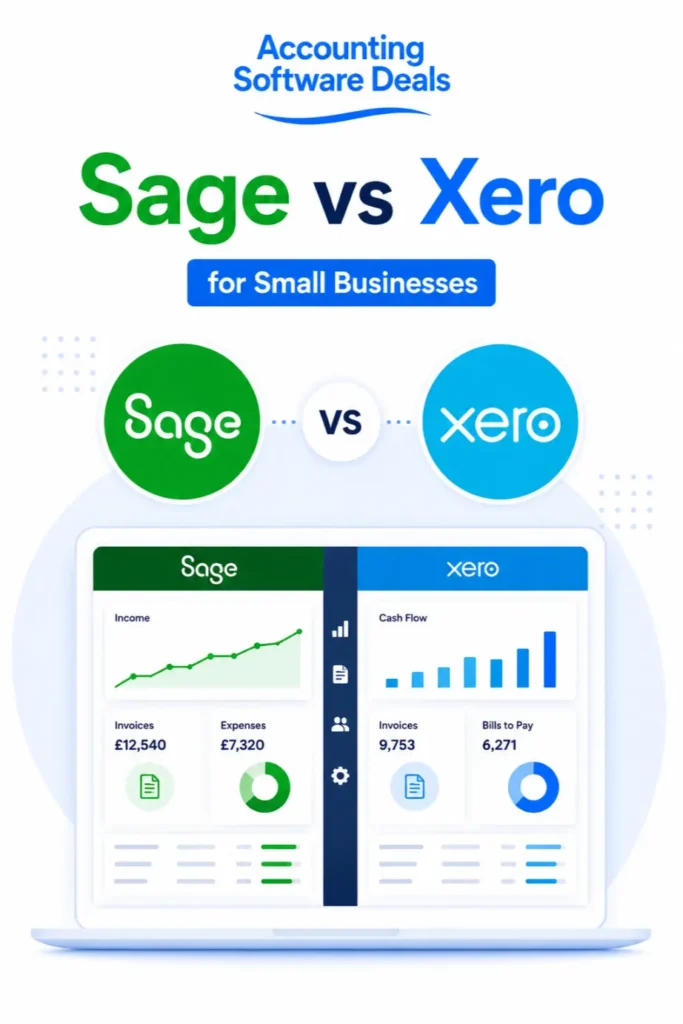
Xero vs Sage Comparison at a Glance
If you’re deciding between Sage vs Xero, both platforms provide comprehensive cloud accounting software for UK businesses, but they appeal to slightly different audiences.
Sage has built its reputation over decades as one of the UK’s most recognised accounting software providers. It offers powerful financial management tools, strong reporting capabilities and solutions that can grow with businesses as their accounting requirements become more advanced. Many established businesses and accountants are already familiar with the Sage ecosystem, making it a popular choice for companies looking for long-term scalability.
Xero, by contrast, was designed as a cloud-first accounting platform with simplicity and collaboration at its core. Its modern interface, extensive app marketplace and intuitive workflows have made it one of the most popular accounting software solutions for freelancers, sole traders, startups and growing SMEs. Businesses looking for straightforward bookkeeping, automation and easy collaboration with accountants often favour Xero.
When comparing Sage vs Xero, both platforms include the core features most businesses expect, including invoicing, expense tracking, bank feeds, financial reporting and Making Tax Digital (MTD) compliance. The biggest differences lie in ease of use, the breadth of third-party integrations, reporting flexibility and the overall user experience.
Current pricing can also influence your decision. New customers can currently access 90% off for 6 months with Sage, while eligible businesses can receive 80% off Xero for 6 months through the latest introductory offer. Although promotional pricing is attractive, it’s important to compare the long-term value, included features and scalability before deciding which platform is the better investment.
Over the following sections, we’ll compare Sage vs Xero in more detail, including features, pricing, HMRC compliance, usability and overall value, to help you determine which accounting software is the right fit for your business.
Xero vs Sage Comparison Table
Before looking at each area in detail, here’s a quick overview of how Sage and Xero compare across the features that matter most to UK businesses.
The table below summarises the key differences between Xero vs Sage, making it easier to compare pricing, features and ease of use at a glance.
| Feature | Sage | Xero |
|---|---|---|
| Best for | Established businesses and growing SMEs | Freelancers, startups and growing SMEs |
| Ease of use | 4/5 | 5/5 |
| Pricing | Competitive with 90% off for 6 months | Competitive with 80% off for 6 months |
| HMRC & MTD Compliance | ✔ Yes | ✔ Yes |
| Invoicing & Quotes | ✔ Yes | ✔ Yes |
| Bank Feeds | ✔ Yes | ✔ Yes |
| Financial Reporting | Excellent | Excellent |
| Third-Party Integrations | Very Good | Excellent |
| Mobile App | ✔ Yes | ✔ Yes |
| Scalability | Excellent | Excellent |
| Overall | Powerful all-round solution | Best for ease of use and integrations |
Our Take
Both Sage and Xero are among the best accounting software platforms available for UK businesses, so there isn’t a clear winner based on features alone. Sage is particularly well suited to established businesses that require comprehensive financial management and reporting, while Xero stands out for its intuitive interface, extensive app marketplace and ease of use.
Current introductory offers also make both platforms attractive. New Sage customers can claim 90% off for 6 months, while eligible Xero customers can receive 80% off for 6 months through the latest promotion. Although these discounts reduce the initial cost, your decision should ultimately be based on which platform best supports your business now and as it grows.
Which Platform Is Right for You?
While both Sage and Xero provide excellent cloud accounting software for UK businesses, the right choice depends on your business size, accounting requirements and future growth plans.
Choose Sage if you:
- Want robust accounting software for an established or growing business.
- Need advanced financial reporting and greater control over business finances.
- Prefer a platform with a long-standing reputation among UK businesses and accountants.
- Expect your accounting requirements to become more complex over time.
- Want to take advantage of the current 90% off for 6 months Sage offer.
Choose Xero if you:
- Want modern, easy-to-use cloud accounting software.
- Are a freelancer, sole trader, startup or growing SME.
- Need access to one of the largest third-party app marketplaces.
- Value automation, collaboration and an intuitive user experience.
- Want to claim the current 80% off Xero for 6 months offer.
Our Recommendation
There isn’t a single winner in the Sage vs Xero comparison because both platforms excel in different areas. Sage is often the better choice for businesses looking for comprehensive financial management and long-term scalability, while Xero is ideal for businesses that prioritise simplicity, automation and seamless integrations.
If you’re still undecided, the detailed comparisons below will help you evaluate Sage vs Xero across features, pricing, ease of use, HMRC compliance and customer support, so you can choose the accounting software that best fits your business.

Xero vs Sage Features Compared
When comparing Xero vs Sage features, both platforms include the essential accounting tools UK businesses need. If you’re deciding between Xero or Sage, both provide invoicing, bank reconciliation, VAT management, reporting and automation, but they differ in usability, integrations and scalability.
Invoicing & Quotes
Both Sage and Xero make it easy to create and send professional invoices, customise branding and accept online payments. Recurring invoices, payment reminders and automated workflows help businesses get paid faster while reducing manual administration.
Xero offers a slightly more intuitive invoicing experience, making it particularly appealing to freelancers and small businesses. Sage provides equally capable invoicing tools but includes additional controls that may be more valuable for businesses with more established financial processes.
Bank Feeds & Reconciliation
Both providers support secure bank feeds that automatically import transactions, reducing the need for manual data entry.
Xero is widely recognised for its fast and user-friendly bank reconciliation process, allowing users to categorise transactions quickly with automated suggestions. Sage also delivers reliable bank reconciliation, with powerful matching tools that suit businesses managing higher transaction volumes.
Expense Management
Tracking expenses is straightforward on both platforms. Users can upload receipts, categorise business expenses and monitor spending throughout the financial year.
Xero places greater emphasis on automation and mobile receipt capture, while Sage offers more detailed financial controls that may appeal to businesses with more complex accounting requirements.
Reporting & Financial Insights
Reporting is an area where both platforms perform exceptionally well.
Sage provides comprehensive financial reporting with detailed management reports, cash flow analysis and tools that support more advanced financial oversight. Xero also offers an excellent range of real-time reports and dashboards, presenting financial information in a highly accessible format that many small business owners find easier to interpret.
Automation & Productivity
Automation helps reduce repetitive bookkeeping tasks and improve accuracy.
Xero excels in workflow automation through recurring invoices, bank rules, payment reminders and its extensive integration marketplace. Sage also includes automation features but focuses more on providing robust financial management alongside efficient bookkeeping processes.
Our Verdict
From a feature perspective, Sage vs Xero is a close comparison because both platforms provide everything most UK businesses need to manage their accounts effectively. Sage offers greater depth for businesses requiring more advanced financial management, while Xero delivers a simpler, more intuitive experience backed by one of the largest app ecosystems available.
If introductory pricing is an important factor, remember that eligible new customers can currently claim 90% off for 6 months with Sage or 80% off Xero for 6 months, making both platforms excellent value while you evaluate which feature set best suits your business.
Xero vs Sage Pricing Comparison
When comparing Xero vs Sage pricing, it’s important to look beyond the monthly subscription cost. Many businesses searching for Xero or Sage want to know which offers the best long-term value, taking into account pricing, features, support, HMRC compliance and scalability.
Sage offers a range of subscription plans designed for sole traders, small businesses and growing companies. Its plans become progressively more feature-rich, making it a strong option for businesses expecting increasingly complex accounting needs. New customers can currently benefit from 90% off for 6 months, providing an excellent opportunity to explore the platform before paying full price.
Xero also offers several pricing tiers that cater to businesses of different sizes. Its plans are known for balancing affordability with a comprehensive feature set, including invoicing, bank feeds, expense management and reporting. Eligible new customers can currently claim 80% off Xero for 6 months, making it one of the most competitive introductory offers available.
While Sage’s free introductory period provides immediate savings, Xero’s extended percentage discount can offer greater value for businesses selecting higher-tier plans. The best choice depends not only on the promotional offer but also on the functionality your business requires over the long term.
As your business grows, both providers allow you to upgrade your subscription without migrating to another platform. This flexibility means you can start with an entry-level plan and access more advanced features as your accounting requirements evolve.
Our Verdict
When comparing Sage vs Xero pricing, both providers deliver strong value for money. Sage’s 90% off for 6 months offer is attractive for businesses looking to minimise upfront costs, while 80% off Xero for 6 months provides exceptional savings over a longer introductory period.
Rather than choosing purely on price, consider which platform offers the features, usability and scalability your business needs. Before subscribing, it’s also worth checking the latest offers for both providers, as promotional terms and eligibility may change over time.
Xero vs Sage Ease of Use
When comparing Xero vs Sage, ease of use is often one of the deciding factors. Businesses choosing between Xero or Sage frequently prefer Xero for its intuitive interface, while Sage offers greater depth for more advanced accounting requirements.
Xero is widely regarded as one of the easiest accounting software platforms to learn. Its clean interface, intuitive navigation and modern dashboard make it straightforward for freelancers, sole traders and small business owners to manage invoices, reconcile bank transactions and monitor cash flow with minimal training. Many users can begin using Xero confidently within a short period, even without prior accounting experience.
Sage also offers a user-friendly experience, but its interface is geared towards businesses that require more comprehensive financial management. The additional reporting options and accounting controls provide greater flexibility, although new users may need a little longer to become familiar with the platform. For businesses with dedicated finance teams or more advanced accounting processes, this additional functionality can be a significant advantage.
Both providers offer mobile apps that allow users to create invoices, record expenses, review financial performance and access business data while away from the office. This flexibility makes it easier to manage day-to-day finances wherever you are.
For businesses working closely with accountants or bookkeepers, both Sage and Xero support collaboration by allowing secure access to financial records. Xero has particularly strong adoption among UK accountancy firms, while Sage continues to be a trusted platform used by many established businesses and finance professionals.
Our Verdict
When it comes to ease of use, Xero has the advantage thanks to its intuitive design, straightforward navigation and shorter learning curve. Sage remains easy to use but offers a more feature-rich environment that is better suited to businesses with increasingly complex accounting requirements.
If you’re looking for accounting software that you can get up and running with quickly, Xero is likely to be the better choice. If you value greater financial control and expect your accounting needs to grow over time, Sage’s more comprehensive feature set may prove worthwhile. Both providers also offer attractive introductory promotions, with 90% off for 6 months from Sage and 80% off Xero for 6 months available for eligible new customers.
HMRC Compliance & Making Tax Digital
For UK businesses, HMRC compliance is an essential consideration when choosing accounting software. Both Sage and Xero are fully compliant with Making Tax Digital (MTD) for VAT, allowing businesses to maintain digital records and submit VAT returns directly to HMRC.
Both platforms simplify VAT management by automatically calculating VAT, generating VAT reports and reducing the risk of manual errors. This not only helps businesses remain compliant with current regulations but also saves valuable time when preparing tax returns.
Xero has built its reputation on providing a straightforward, cloud-based approach to HMRC compliance. VAT returns can be prepared and submitted directly from the platform, while real-time dashboards make it easy to monitor tax liabilities throughout the financial year.
Sage offers the same core compliance features but also provides additional financial controls and reporting capabilities that may appeal to businesses with more complex accounting requirements. Established businesses managing larger transaction volumes often appreciate the additional depth available within the Sage platform.
As HMRC continues to expand its digital tax initiatives, both Sage and Xero regularly update their software to ensure businesses remain compliant with the latest requirements without needing to manage updates manually.
Our Verdict
There is very little to separate Sage and Xero when it comes to HMRC compliance. Both provide reliable Making Tax Digital functionality, accurate VAT reporting and direct submissions to HMRC, making either platform an excellent choice for UK businesses looking to stay compliant while simplifying their accounting processes.

Xero vs Sage Scalability Comparison
When deciding between Xero vs Sage, scalability should be one of your biggest considerations. Whether you choose Xero or Sage, you’ll want accounting software that can grow alongside your business without requiring a costly migration later.
Sage has long been recognised as a platform that supports businesses as they become more established. Its range of products and advanced financial management capabilities make it well suited to businesses with increasing reporting requirements, multiple users and more sophisticated accounting processes. For companies expecting significant growth, Sage offers a clear upgrade path without the need to move to a different software provider.
Xero is also highly scalable and has become a popular choice for growing SMEs. Businesses can start with a basic subscription and upgrade as they need additional functionality, while its extensive app marketplace allows users to extend the platform with payroll, inventory management, CRM systems and industry-specific software. This flexibility means many businesses can continue using Xero as they expand without outgrowing the platform.
Both providers support multiple users, cloud-based collaboration and integrations that help businesses manage increasing workloads. The biggest difference is that Sage focuses on expanding its own suite of financial tools, while Xero offers greater flexibility through its large ecosystem of third-party applications.
Our Verdict
When comparing Sage vs Xero for scalability, both platforms perform exceptionally well. Sage is particularly well suited to businesses expecting increasingly complex accounting requirements, while Xero offers outstanding flexibility through its cloud-first approach and extensive integration marketplace.
For most freelancers, sole traders and growing SMEs, either platform can comfortably support long-term growth. The better choice depends on whether you value Sage’s comprehensive financial management tools or Xero’s flexibility, simplicity and connected ecosystem.
Xero vs Sage Integrations
Comparing Xero vs Sage integrations is important because most businesses rely on payroll, CRM, ecommerce and payment processing software. Xero offers one of the largest app marketplaces, while Sage focuses on deep integrations with core business applications.
Xero has one of the largest app marketplaces in the accounting software industry, with hundreds of integrations covering payment providers, ecommerce platforms, customer relationship management systems, inventory management and productivity tools. This flexibility makes it particularly attractive for businesses that want to build a connected software ecosystem around their accounting platform.
Sage also offers a strong selection of integrations with many popular business applications, including payroll, payment solutions, banking services and ecommerce platforms. In recent years, Sage has continued to expand its integration capabilities, making it easier for businesses to connect their accounting software with the systems they already use.
For businesses with more specialised requirements, Xero generally provides greater flexibility thanks to its larger third-party marketplace. However, many businesses will find that Sage includes all the integrations they need to manage their finances efficiently without relying on a large number of external applications.
Our Verdict
Both Sage and Xero integrate well with modern business software, but Xero has the advantage if a broad app ecosystem is a priority. Its extensive marketplace gives businesses more choice as they grow and adopt additional systems. Sage remains an excellent option, particularly for businesses looking for reliable accounting software with a strong range of essential integrations rather than the largest possible selection.
Xero vs Sage Support & Customer Service
When comparing Xero vs Sage, customer support can be just as important as pricing or features. Both providers offer comprehensive support resources, although their approach differs depending on whether you prefer self-service help or direct assistance.
Sage offers comprehensive customer support alongside an extensive library of guides, tutorials and knowledge base articles. Businesses can also access onboarding resources and training designed to help users become familiar with the platform’s features. Sage’s long-standing presence in the UK accounting market means many accountants and finance professionals already have experience using the software.
Xero also provides an excellent support centre, online learning resources and an active community of users and accounting professionals. Its intuitive interface often reduces the need for ongoing support, while its widespread adoption among UK accountants makes it easy to find professional advice and assistance when required.
For businesses that work closely with an accountant or bookkeeper, both platforms support secure collaboration by allowing accountants to access financial records directly. Xero is particularly popular with modern accountancy firms, while Sage continues to be widely used by established businesses and accounting professionals across the UK.
Our Verdict
When comparing Sage vs Xero for customer support and accountant access, both providers perform well. Sage benefits from decades of experience and a strong reputation within the accounting profession, while Xero combines excellent self-service resources with broad adoption among UK accountants. Whichever platform you choose, you’ll have access to the support and expertise needed to manage your business finances with confidence.
Is Sage Better Than Xero?
If you’re deciding between Xero vs Sage, both platforms are among the UK’s best accounting software solutions. Comparing Xero or Sage ultimately comes down to your business size, budget and accounting requirements.
Choose Sage if:
- You run an established or growing business with increasingly complex accounting requirements.
- You need advanced financial reporting and greater control over your business finances.
- You prefer software with a long-standing reputation among UK businesses and accountants.
- You want a platform that can support your business as it becomes more sophisticated.
Choose Xero if:
- You want modern, cloud-first accounting software that’s easy to learn.
- You’re a freelancer, sole trader, startup or growing SME.
- You value automation, intuitive workflows and a clean user interface.
- You want access to one of the largest third-party integration marketplaces available.
Ultimately, there isn’t a single winner in the Sage vs Xero comparison. If you’re asking is Sage better than Xero, the answer depends entirely on your business requirements. Sage is often the stronger choice for businesses that require more comprehensive financial management, while Xero excels for businesses looking for simplicity, flexibility and an outstanding overall user experience.
If price is an important factor in your decision, it’s also worth comparing the latest introductory offers before subscribing. New customers can currently claim 90% off for 6 months, while eligible businesses can receive 80% off Xero for 6 months, making both platforms even better value for businesses looking to invest in reliable cloud accounting software.
Latest Sage & Xero Offers
If you’ve narrowed your choice down to Sage or Xero, it’s worth taking advantage of the latest introductory offers before signing up. Both providers are currently running promotions for eligible new customers, helping to reduce the cost of getting started with their accounting software.
Whether your priority is affordability, ease of use or long-term scalability, these offers provide an excellent opportunity to trial two of the UK’s leading cloud accounting software platforms at a significantly reduced cost.
Current Sage Offer
New eligible customers can currently claim:
- 90% off for 6 months
- Available on qualifying Sage subscriptions
- Full access to your chosen plan during the promotional period
- Ideal for businesses looking to minimise upfront costs
👉 Claim the latest Sage offer here: https://accountingsoftwaredeals.co.uk/recommends/sage-offer
Current Xero Offer
Eligible new customers can currently receive:
- 80% off for 6 months
- Available on selected Xero plans
- Access to all features included within your chosen subscription
- One of the most competitive introductory accounting software offers currently available
👉 Claim the latest Xero offer here: https://accountingsoftwaredeals.co.uk/recommends/xero-offer
Which Offer Should You Choose?
If your decision is based purely on introductory pricing, both promotions offer excellent value. However, the right choice should ultimately depend on which platform best meets your business needs.
If you prefer Sage’s comprehensive financial management and reporting capabilities, the 90% off for 6 months offer provides a cost-effective way to get started. If you’re leaning towards Xero’s intuitive interface, automation and extensive integration marketplace, the 80% off Xero for 6 months promotion offers exceptional savings over a longer period.
Before subscribing, we recommend reviewing the latest offer details and eligibility requirements, as promotions may change over time.
Sage vs Xero Offer FAQs
What is the current Sage offer?
Eligible new customers can currently claim 90% off for 6 months when signing up for a qualifying Sage subscription through our exclusive offer page. This allows businesses to explore Sage’s accounting software before paying the standard subscription price.
What is the current Xero offer?
New Xero customers can currently receive 80% off Xero for 6 months on selected plans when signing up through our exclusive Xero offer. It’s one of the most generous introductory discounts available for UK accounting software.
Which offer provides better value?
Both offers provide significant savings, but the better value depends on your chosen subscription and how long you plan to use the software. Sage’s 90% off for 6 months removes your upfront costs entirely, while 80% off Xero for 6 months provides a substantial discount over a longer introductory period. It’s worth comparing both offers alongside the features each platform provides before making your decision.
Can I claim these offers if I’m already a customer?
In most cases, these introductory promotions are available to eligible new customers only. Existing subscribers are unlikely to qualify, although providers occasionally run separate promotions for current customers. Always check the latest eligibility criteria before signing up.
Do the offers affect the software features?
No. The promotional offers reduce the subscription cost but don’t limit the functionality available within your chosen plan. You’ll receive the same accounting features, HMRC compliance tools, reporting capabilities and support as customers paying the standard subscription price.
Where can I claim the latest Sage and Xero offers?
To ensure you receive the latest available promotion, sign up using our exclusive offer pages:
Sage Offer: https://accountingsoftwaredeals.co.uk/recommends/sage-offer/
Xero Offer: https://accountingsoftwaredeals.co.uk/recommends/xero-offer/
We recommend checking the latest terms and eligibility before subscribing, as introductory offers may change over time.
Frequently Asked Questions
Which is better, Sage or Xero?
There isn’t a universal winner in the Sage vs Xero comparison. Sage is better suited to established businesses that require comprehensive financial management and advanced reporting, while Xero is often the preferred choice for freelancers, sole traders and growing SMEs looking for intuitive cloud accounting software with excellent automation and integrations.
Is Sage cheaper than Xero?
Both providers offer competitively priced subscription plans, but the overall cost depends on the plan you choose and any introductory promotions available. Sage currently offers 90% off for 6 months for eligible new customers, while Xero offers 80% off for 6 months, making both platforms excellent value.
Which is easier to use?
Xero is generally considered easier to learn thanks to its clean interface and intuitive navigation. Sage is also user-friendly but includes more advanced accounting functionality, which can result in a slightly steeper learning curve for new users.
Which is better for small businesses?
Both platforms are excellent options for small businesses. Xero is particularly popular with startups, freelancers and growing SMEs due to its simplicity and extensive app marketplace. Sage is often chosen by businesses that require more detailed financial management and expect their accounting needs to become more complex over time.
Which accounting software do UK accountants prefer?
Both Sage and Xero are widely supported by UK accountants. Xero has become especially popular among modern accountancy practices because of its cloud-first approach and collaborative features, while Sage remains one of the UK’s most established accounting software providers with strong adoption across many industries.
Are Sage and Xero HMRC compliant?
Yes. Both Sage and Xero support Making Tax Digital (MTD) for VAT, allowing businesses to maintain digital records and submit VAT returns directly to HMRC. Both providers regularly update their software to remain compliant with the latest HMRC requirements.
Can I switch from Sage to Xero or from Xero to Sage?
Yes. Both providers offer migration tools and support to help businesses move from another accounting software platform. If you’re planning to switch, it’s worth reviewing your existing financial records and seeking advice from your accountant to ensure a smooth transition.
Which platform offers better value for money?
Both Sage and Xero deliver excellent value, but the better choice depends on your priorities. If you value advanced financial management and long-term scalability, Sage may offer better value. If ease of use, automation and integrations are your priority, Xero is often the stronger option. Comparing the latest offers alongside the features included in each subscription can help you decide which platform is the better investment.
Is Xero Better Than Sage?
If ease of use, automation and third-party integrations are your priorities, then Xero is often the better choice. Businesses looking for more advanced financial reporting, greater accounting control and long-term scalability may prefer Sage. Ultimately, the answer depends on whether Xero or Sage better fits your business requirements.
Xero or Sage: Which Is Better for Small Businesses?
For freelancers, sole traders and many growing SMEs, Xero is often the preferred option thanks to its intuitive interface and extensive integrations. Established businesses with more advanced accounting requirements may find Sage offers greater flexibility and reporting capabilities. Comparing Xero vs Sage features will help determine which platform best suits your business.
Which Has Better Features: Xero or Sage?
When comparing Xero vs Sage features, both platforms include invoicing, bank feeds, expense tracking, reporting and HMRC Making Tax Digital (MTD) compliance. Xero stands out for its ease of use and integrations, while Sage offers more advanced reporting and financial controls.
If you’re deciding between Xero or Sage, the right choice depends on your business needs. For most small businesses, both are excellent options, but the best solution will depend on the features that matter most to you.
Is Xero or Sage Better Value for Money?
Both offer excellent value, but the better option depends on your business needs. Xero is often better value for small businesses looking for ease of use and integrations, while Sage provides excellent value for businesses needing advanced reporting and financial controls. Comparing Xero vs Sage pricing and features is the best way to decide.
Recap
Sage and Xero are two of the leading accounting software platforms available to UK businesses, and both provide the essential tools needed to manage invoicing, bookkeeping, VAT, reporting and Making Tax Digital compliance. The right choice comes down to the size of your business, the complexity of your accounting requirements and the way you prefer to work.
Sage is an excellent choice for established businesses that need advanced financial management, comprehensive reporting and software that can support increasingly complex accounting processes. Its long-standing reputation and strong presence within the UK accounting industry make it a trusted solution for businesses planning for long-term growth.
Xero stands out for its intuitive interface, cloud-first design and extensive integration marketplace. It’s particularly well suited to freelancers, sole traders, startups and growing SMEs that want modern accounting software that’s easy to use, highly automated and simple to scale as the business expands.
Whichever platform you choose, both providers offer reliable HMRC-compliant accounting software backed by regular updates, strong security and excellent support. Before making your final decision, it’s worth comparing the latest Sage and Xero offers alongside the features included in each subscription to ensure you’re getting the best overall value.
Conclusion
Choosing between Sage vs Xero ultimately comes down to the needs of your business rather than one platform being objectively better than the other. Both providers offer reliable, cloud-based accounting software with strong HMRC compliance, comprehensive bookkeeping features and the ability to support businesses as they grow.
Sage is the better choice for businesses that require more advanced financial management, detailed reporting and a platform that can handle increasingly complex accounting requirements. Its long-standing reputation and robust feature set make it a trusted option for established businesses across the UK.
Xero, on the other hand, excels in usability, automation and flexibility. Its intuitive interface, extensive integration marketplace and collaborative features make it an excellent solution for freelancers, sole traders, startups and growing SMEs that want modern accounting software that’s easy to use from day one.
If you’re still deciding between Sage vs Xero, we recommend comparing the latest introductory offers alongside the features included in each subscription. Both providers currently offer significant savings for eligible new customers, making now an excellent time to choose the accounting software that’s the best fit for your business.
Whether you choose Sage or Xero, you’ll be investing in one of the UK’s leading accounting software platforms, giving you the tools to manage your finances efficiently, stay compliant with HMRC requirements and support your business as it continues to grow.
If you’re still deciding between Xero or Sage, consider your future growth plans as well as your current requirements. While both platforms provide excellent cloud accounting software for UK businesses, comparing Xero vs Sage features, pricing and integrations will help you make the right long-term decision.
Disclaimer: The content on this website is intended for informational purposes only and should not be construed as legal, financial, or professional advice. While we strive to ensure that the information is accurate and up-to-date at the time of publication, please be aware that regulations and circumstances may change. We recommend consulting with a qualified professional for personalised guidance specific to your situation. Additionally, some links on this website may be affiliate links, meaning we may earn a commission if you make a purchase through those links. Please ensure you read and understand all terms and conditions before making any decisions.
Xero Relationship Disclosure: This website is independent and not affiliated with or endorsed by Xero. We may earn a commission if you sign up to Xero via our referral links.
Latest posts:
- Xero vs Sage: Which Accounting Software Is Best for Small Businesses?
 Introduction Choosing between Xero vs Sage is one of the biggest decisions UK business owners make when selecting accounting software. Whether you’re comparing Xero or Sage, looking at Xero vs Sage features, or wondering is Xero better than Sage or is Sage better than Xero, this guide compares pricing, ease of use, HMRC compliance, integrations… Read more: Xero vs Sage: Which Accounting Software Is Best for Small Businesses?
 - Free Agent Accounting Software Review
 Introduction Choosing the right accounting software can save you hours of administration each month while helping you stay compliant with HMRC requirements. For UK freelancers, sole traders and small businesses, FreeAgent accounting software has become one of the most popular cloud accounting solutions thanks to its simple interface, built-in tax features and time-saving automation. In… Read more: Free Agent Accounting Software Review
 - Zoho Books Accounting Software Review UK (2026)
 Introduction Choosing the right accounting software is one of the most important decisions for any business, and Zoho Books accounting software has become an increasingly popular choice for freelancers, sole traders, startups and small businesses looking for an affordable cloud-based solution. Combining invoicing, bookkeeping, expense tracking, automation and HMRC-compliant tax tools, Zoho Books is designed… Read more: Zoho Books Accounting Software Review UK (2026)
 - Xero vs Zoho Books for Small Businesses (2026)
 Introduction Choosing accounting software is one of the most important decisions a sole trader or small business owner can make. The right platform saves time, reduces stress around tax, and gives you clearer insight into cash flow and profitability. The wrong one can feel restrictive, confusing, or unnecessarily expensive as your business grows. That’s why… Read more: Xero vs Zoho Books for Small Businesses (2026)
 - Zoho Books vs Sage for Small Businesses (2026 Comparison Guide)
 Introduction Choosing the right accounting software is one of the most important decisions for any UK sole trader or small business. The right platform can save hours of administration every month, simplify VAT returns, improve cash flow management and provide better visibility over your finances as your business grows. If you’re comparing Zoho Books vs… Read more: Zoho Books vs Sage for Small Businesses (2026 Comparison Guide)
 - Sage vs QuickBooks Accounting Software Comparison
 Introduction Choosing between Sage and QuickBooks is one of the most important software decisions facing UK sole traders and small businesses. Both platforms are HMRC-recognised, Making Tax Digital (MTD) compliant and trusted by thousands of UK businesses, but they take noticeably different approaches to bookkeeping, automation and financial management. Sage has traditionally been the preferred… Read more: Sage vs QuickBooks Accounting Software Comparison