
Introduction
Choosing the best accounting software for sole traders is one of the most important decisions a self-employed business owner can make. Whether you’re a freelancer, contractor, consultant or tradesperson, the right software should do far more than record income and expenses. The best sole trader accounting software helps you stay compliant with HMRC, improve cash flow, automate admin and give you a clearer picture of your business finances. Having reviewed the UK’s leading accounting platforms, we’ve found that choosing software which can grow alongside your business often delivers far better long-term value than simply selecting the cheapest option.
In the past, many sole traders relied on spreadsheets or manual bookkeeping. Today, that approach is increasingly outdated. HMRC’s Making Tax Digital (MTD) rules, combined with rising administrative demands, mean that digital accounting tools are no longer optional for many businesses. Modern accounting software helps sole traders automate invoicing, track expenses, calculate tax, and stay organised throughout the year – not just at Self Assessment time.
The challenge is not whether to use accounting software, but which one to choose. The market is crowded with tools claiming to be the best sole trader accounting software or the best self employed accounting software. Some focus on simplicity, others on advanced reporting, and pricing models vary widely. Picking the wrong solution can lead to wasted money, poor visibility, or systems that are too complex for everyday use.
This guide is designed to cut through the noise. We explain what makes great accounting software for sole traders, what features matter most in 2026, and how to choose a platform that fits your business today and in the future. We also review the three most established providers in the UK – Xero, Sage, and QuickBooks – and compare their strengths, pricing, and suitability for sole traders.
Throughout this article, you will find comparison links and reminders to check live pricing and features. If you are actively comparing platforms, it is also worth reviewing the current Xero promotion offering 80% off for 6 months, subject to eligibility and provider terms.
Contents
- What Is Accounting Software for Sole Traders?
- Why Sole Traders Need Accounting Software
- Key Features to Look for in Sole Trader Accounting Software
- Simple vs Advanced Accounting Software: What’s Right for You?
- Cloud-Based vs Desktop Accounting Software
- Pricing & Feature Comparison: Xero vs Sage vs QuickBooks
- Promotion Conditions and Offer Details
- Frequently Asked Questions
- Recap
- Conclusion
What Is Accounting Software for Sole Traders?
Accounting software for sole traders is designed to help self-employed professionals manage their finances accurately, efficiently and in line with HMRC requirements. The best accounting software for sole traders automates bookkeeping, simplifies tax reporting and provides real-time visibility over business performance, allowing sole traders to spend less time on administration and more time running their business.
At a basic level, accounting software records sales, expenses, and payments. Most modern platforms connect directly to your business bank account, importing transactions automatically and categorising them using smart rules. This significantly reduces errors and saves time compared to spreadsheets.
For UK sole traders, accounting software also supports tax compliance. The best self employed accounting software helps calculate income tax liabilities, supports VAT submissions for registered businesses, and produces reports required for Self Assessment. Many platforms are designed specifically to align with HMRC requirements.
Another major benefit is visibility. The best self employed accounting software provides real-time dashboards showing income, expenses, outstanding invoices and cash flow, allowing sole traders to make informed business decisions rather than relying on outdated spreadsheets or manual bookkeeping.
Finally, most platforms allow collaboration with accountants or bookkeepers. Secure access means your accountant can review records, make adjustments, or prepare returns without endless email exchanges.
Why Sole Traders Need Accounting Software
In 2026, accounting software has become an essential business tool for most sole traders. Increasing HMRC reporting requirements, Making Tax Digital and growing administrative demands mean that the best accounting software for sole traders is no longer simply about bookkeeping – it helps automate daily tasks, improve financial visibility and reduce the time spent managing your business finances.
HMRC’s Making Tax Digital initiative continues to expand, and digital record-keeping is now the standard expectation for VAT-registered businesses. Even non-VAT-registered sole traders benefit from software that keeps accurate, timestamped records throughout the year.
Time efficiency is another major factor. Sole traders often manage every part of their business themselves. The best simple accounting software for sole traders automates repetitive tasks such as bank reconciliation, recurring invoices, and expense tracking, freeing up valuable hours.
Financial clarity is also critical in an uncertain economy. Real-time reporting allows you to spot cash-flow issues early, understand seasonal trends, and make informed decisions. Manual systems rarely provide this level of insight.
Finally, professionalism matters. Digital invoices, online payment links, and organised records create a better experience for clients and reduce payment delays.
Key Features to Look for in Sole Trader Accounting Software
When comparing platforms, certain features consistently define the best accounting software for sole traders.
Bank feeds are essential. Automatic imports from UK banks reduce manual entry and ensure accuracy. Look for daily updates and easy reconciliation tools.
Invoicing tools should allow custom branding, recurring invoices, and online payments. Faster payments improve cash flow and reduce admin.
Expense tracking is another priority. Mobile receipt capture is especially useful for sole traders who travel or work on-site.
Tax and reporting features are crucial. The best sole trader accounting software calculates VAT (where applicable), estimates tax liabilities, and produces accountant-ready reports.
Ease of use cannot be overlooked. Clear navigation, plain-English terminology, and good customer support make a significant difference.
Mobile apps are now one of the biggest differentiators between accounting software providers. The best accounting apps for sole traders allow you to create invoices, photograph receipts, reconcile transactions and monitor cash flow wherever you are working.
Integrations are equally important. The best sole trader accounting software connects with business bank accounts, payment providers, payroll systems, CRM software and hundreds of third-party applications, reducing duplicate administration and improving productivity.
AI-powered automation is becoming increasingly common across the best accounting software for sole traders. Features such as automatic transaction categorisation, intelligent bank reconciliation and financial insights can save self-employed business owners hours every month.
Simple vs Advanced Accounting Software: What’s Right for You?
Not every sole trader needs advanced accounting features. For many, simplicity is the priority.
Simple platforms focus on invoicing, expenses, and basic reporting. They are ideal for freelancers and service-based businesses with straightforward finances. The best simple accounting software for sole traders removes complexity while still remaining compliant.
Advanced platforms include features such as project tracking, inventory management, and multi-currency support. These are better suited to growing or more complex businesses.
Most leading providers allow you to start simple and upgrade later, which is often the most cost-effective approach.
Cloud-Based vs Desktop Accounting Software
Cloud accounting software has become the preferred choice for most sole traders because it offers greater flexibility, automatic updates and secure online access from any device. The best accounting software for sole traders also allows accountants to collaborate in real time, reducing paperwork and making tax preparation considerably easier than traditional desktop software.
For sole traders, cloud platforms offer flexibility and peace of mind. Desktop software still exists but requires manual updates and backups, making it less suitable for most modern businesses.
For most UK businesses, cloud accounting software has become the standard because it provides better security, greater flexibility and easier collaboration than traditional desktop accounting software.
Which Accounting Software Is Right For You?
Every sole trader has different priorities, so there isn’t a single accounting platform that’s right for everyone. The best accounting software for sole traders depends on your business size, budget, future growth plans and how you prefer to manage your finances. These recommendations provide a practical starting point based on the strengths of each platform.
Choose Xero if:
- You want the best all-round accounting software for sole traders.
- You expect your business to grow into a limited company.
- You want market-leading automation and reporting.
Choose QuickBooks if:
- You want simple bookkeeping.
- You’re new to accounting software.
- You prefer guided workflows.
Choose Sage if:
- You prefer a more traditional accounting approach.
- HMRC compliance is your highest priority.
- You already use other Sage products.
Choose FreeAgent if:
- You’re a freelancer or contractor.
- You want simple expense tracking.
- Ease of use is your main priority.
Choose Zoho Books if:
- You already use Zoho applications.
- You want workflow automation.
- You’re looking for excellent value.
Continue your research by reading our detailed provider reviews and comparison guides before making your decision.
Product Comparison: Xero vs Sage vs QuickBooks
Choosing between Xero, Sage and QuickBooks is one of the most common decisions when searching for the best accounting software for sole traders. While all three platforms provide excellent cloud accounting software for self-employed businesses, they each suit slightly different types of sole trader.
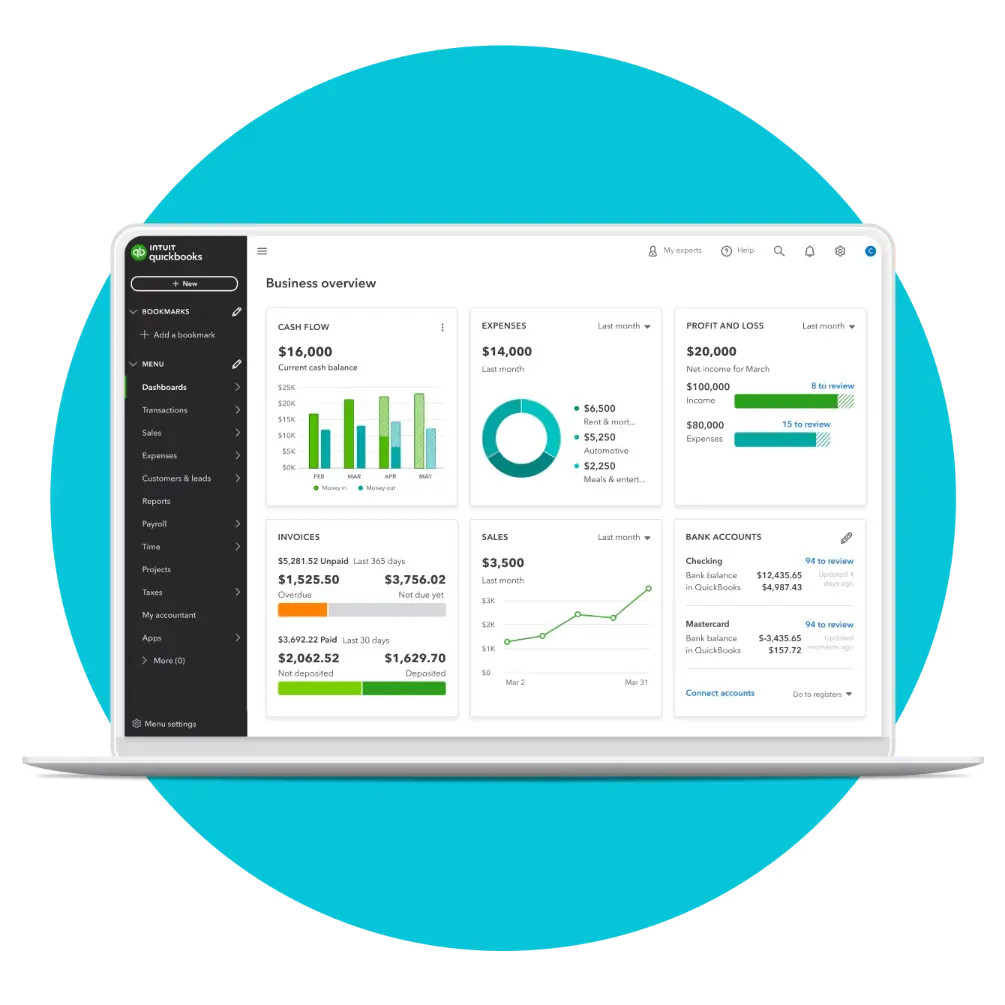
QuickBooks is often favoured by sole traders who want structure and guided workflows. It provides clear prompts, automated transaction categorisation, and straightforward expense tracking, which can be particularly helpful for those new to accounting software. QuickBooks is also strong in areas such as mileage tracking and basic tax estimation, making it appealing to self-employed professionals who want reassurance that they are setting money aside correctly for tax. For sole traders who prefer a more prescriptive system with minimal setup, QuickBooks can feel reassuring and organised.
Sage, by contrast, tends to appeal to sole traders and SMEs who value a more traditional accounting approach. It offers robust, HMRC-compliant VAT and Making Tax Digital reporting, clear audit trails, and familiar bookkeeping structures. Sage is often chosen by sole traders who already work closely with an accountant or who expect their accounting processes to remain relatively conventional. While it may feel less flexible or modern than some alternatives, Sage is highly regarded for reliability, consistency, and UK-focused compliance.
Xero consistently stands out as one of the strongest all-round options when assessing the best accounting software for sole traders. Its cloud-first design, clean interface, and real-time reporting make it accessible for beginners while still offering depth for more experienced users. Xero is particularly well suited to sole traders who want simplicity without sacrificing scalability. Features such as automatic bank feeds, easy invoicing, expense tracking, and strong accountant collaboration tools make it practical for day-to-day use, while its extensive integration ecosystem allows businesses to add payroll, payments, or reporting tools as they grow.
For many sole traders, Xero’s balance of ease of use and long-term flexibility is a decisive advantage. It supports simple setups for freelancers and contractors but can scale seamlessly if the business expands, takes on staff, or transitions into a limited company. This makes it especially attractive for self-employed individuals who want to avoid switching software later.
When comparing the best accounting software for sole traders overall, Xero often edges ahead due to its usability, scalability, and strong accountant approval. This advantage is further reinforced when combined with its current introductory offer of 80% off for 6 months, which provides a lower-cost entry point for new users (subject to eligibility and current terms). While Sage and QuickBooks remain excellent options depending on preference and working style, Xero is frequently the most future-proof choice for UK sole traders seeking a modern, flexible accounting solution.
- ✓Cash flow management
- ✓Startup expense tracking
- ✓Automated invoicing
- ✓Bank reconciliation
- ✓Reporting dashboards
- ✓Payroll integration
- ✓Unlimited integrations
- ✓Startup-friendly automation
- ✓Multi-user collaboration
- ✓Real-time dashboards
- ✓Bank feeds
- ✓Scalable cloud accounting
- ✓UK compliance
- ✓Payroll
- ✓VAT management
- ✓Financial reporting
- ✓Business insights
- ✓Cloud accounting
- ✓Excellent value
- ✓Workflow automation
- ✓Customer invoicing
- ✓Expense management
- ✓Bank reconciliation
- ✓$100 credits usable across the Zoho ecosystem
Expert Tip
Don’t choose accounting software based solely on today’s promotional discount. Switching accounting software after a year or two can be time-consuming, particularly if you have years of invoices, expenses and customer records stored within the platform. We generally recommend selecting the solution that will still meet your requirements three to five years from now, even if another provider appears slightly cheaper today.
Continue Your Research
Compare our detailed buying guides before making your decision:
Or read our in-depth reviews:
- Xero Accounting Software Review
- QuickBooks Accounting Software Review
- Sage Accounting Software Review
- FreeAgent Accounting Software Review
- Zoho Books Accounting Software Review
You may also find these guides useful:
- Best Accounting Software for Small Businesses
- Best Accounting Software for Limited Companies
- Accounting Software for Self-Employed
Exclusive Xero Offer for Sole Traders – 80% Off for 6 Months
If you are looking for the best accounting software for sole traders, this current Xero promotion offers one of the most cost-effective ways to get started with professional accounting software in 2026. Eligible sole traders can access 80% off Xero for the first 6 months, making it significantly easier to move away from spreadsheets or manual bookkeeping without committing to full pricing upfront.
This offer allows sole traders to use one of the UK’s leading cloud accounting platforms at a significantly reduced cost. During the discounted period, you can create invoices, reconcile bank transactions automatically, monitor cash flow, track expenses and collaborate with your accountant using the same software trusted by thousands of UK businesses.
Xero is widely used by UK sole traders because it is simple to set up and intuitive to use, even if you have no prior accounting experience. With this promotion, you can explore the platform properly and build consistent accounting habits from the start of your financial year, rather than rushing to organise records at tax time. The software also supports collaboration with accountants, making it easier to get professional support when needed.
The 80% off for 6 months Xero offer is particularly valuable for new businesses, freelancers, and contractors who want access to reliable accounting tools while keeping costs low. Instead of paying full monthly fees from day one, you can invest the savings back into your business while still using one of the best accounting apps for sole traders on the market.
This promotion is available for a limited time and applies to eligible new customers only. Once the discounted period ends, standard pricing applies unless you cancel. Because offers can change, it is always recommended to check the latest terms before signing up.

FAQs: Best Accounting Software for Sole Traders
What is the best accounting software for sole traders in the UK?
The best accounting software for sole traders depends on your needs, but Xero, Sage, and QuickBooks are consistently rated as top options. They offer cloud-based tools designed for UK self-employed businesses, supporting invoicing, expenses, and HMRC compliance.
What is the best sole trader accounting software for beginners?
For beginners, the best sole trader accounting software is one that is easy to use and well supported. Xero is often recommended due to its clean interface, guided setup, and automation features that reduce manual bookkeeping.
What is the best self employed accounting software for HMRC compliance?
The best self employed accounting software supports Making Tax Digital and produces accurate records for Self Assessment. Xero, Sage, and QuickBooks all meet HMRC requirements and are regularly updated as rules change.
Is there a best simple accounting software for sole traders with low turnover?
Yes, many sole traders with low turnover benefit from simple accounting software that focuses on invoicing and expenses. Entry-level plans from Xero, Sage, and QuickBooks are designed for smaller businesses with straightforward finances.
What are the best accounting apps for sole traders who work on the go?
The best accounting apps for sole traders include strong mobile functionality. Xero and QuickBooks both offer mobile apps for invoicing, receipt capture, and expense tracking, making them ideal for freelancers and tradespeople.
Do sole traders legally need accounting software?
Sole traders are not always legally required to use accounting software, but it is mandatory for those within Making Tax Digital for VAT. Even outside MTD, the best accounting software for sole traders makes compliance far easier.
Can the best accounting software for sole traders replace an accountant?
The best accounting software for sole traders does not replace an accountant, but it reduces the amount of work they need to do. This often lowers accountancy fees and improves accuracy through better record-keeping.
What is the best accounting software for sole traders with VAT?
For VAT-registered sole traders, the best accounting software supports VAT calculations and digital submissions. Xero, Sage, and QuickBooks all provide VAT-compliant tools suitable for UK businesses.
Is cloud accounting safe for sole traders?
Yes, the best sole trader accounting software uses encryption, secure data centres, and regular backups. Cloud accounting is generally more secure than spreadsheets or local desktop software when using reputable providers.
How much does the best accounting software for sole traders cost?
Costs vary depending on features, but the best accounting software for sole traders typically starts from around £10–£15 per month. Discounts and introductory offers can significantly reduce costs for new users.
Which is the easiest accounting software for sole traders?
If ease of use is your priority, Xero, QuickBooks and FreeAgent are all excellent choices. They provide intuitive dashboards, automated bank feeds, simple invoicing and mobile apps that make day-to-day bookkeeping much easier for sole traders and self-employed professionals.
Recap
Choosing the best accounting software for sole traders in 2026 is no longer just about keeping tidy records at the end of the tax year. It is about running a compliant, efficient, and financially visible business all year round. As HMRC continues to push digital reporting through Making Tax Digital, sole traders need software that simplifies compliance without adding unnecessary complexity.
Throughout this guide, we have explored what accounting software is, why it matters for self-employed businesses, and which features truly make a difference. The best sole trader accounting software should save time, reduce errors, automate routine admin, and give you real-time insight into how your business is performing.
We also reviewed the three most established providers in the UK market – Xero, Sage, and QuickBooks. Each offers cloud-based solutions designed for sole traders, but they differ in usability, reporting depth, and pricing. Xero stands out for ease of use and strong automation, Sage for UK compliance and support, and QuickBooks for advanced reporting and tax insights.
Ultimately, the best self employed accounting software is the one that fits your workflow today while supporting future growth. Whether you prioritise simplicity, scalability, or value for money, choosing the right platform now can save hours of admin and reduce stress as your business grows.
Conclusion
Choosing the best accounting software for sole traders is about more than staying organised for tax season. The right platform should simplify bookkeeping, reduce administration, improve cash flow visibility and support your business as it grows. Investing in the right accounting software now can save countless hours while helping you remain compliant with HMRC requirements.
For most sole traders, cloud-based accounting software is the clear choice. It keeps your records secure, automatically updated, and accessible wherever you work. It also simplifies collaboration with accountants and prepares your business for future HMRC requirements.
If you are looking for a balance of simplicity, automation, and long-term value, Xero is an excellent option to consider. It is widely regarded as one of the best accounting apps for sole traders and is particularly suitable for those who want an intuitive system without sacrificing functionality. Eligible new customers can currently access 80% off for 6 months, making it a cost-effective way to get started (subject to eligibility and current T&Cs).
Before making your final decision, compare the features, pricing, integrations and current introductory offers available from each provider. The best accounting software for sole traders should simplify your bookkeeping today while giving you the flexibility to grow your business in the future. While Xero remains our overall recommendation for many UK sole traders, QuickBooks, Sage, FreeAgent and Zoho Books all provide excellent alternatives depending on your business requirements and preferred way of working.
👉 Get 80% off Xero for 6 months plus: https://accountingsoftwaredeals.co.uk/recommends/xero-offer/
Subject to eligibility; offers may change. Always review current terms and conditions before subscribing.
Disclaimer: The content on this website is intended for informational purposes only and should not be construed as legal, financial, or professional advice. While we strive to ensure that the information is accurate and up-to-date at the time of publication, please be aware that regulations and circumstances may change. We recommend consulting with a qualified professional for personalised guidance specific to your situation. Additionally, some links on this website may be affiliate links, meaning we may earn a commission if you make a purchase through those links. Please ensure you read and understand all terms and conditions before making any decisions.
Xero Relationship Disclosure: This website is independent and not affiliated with or endorsed by Xero. We may earn a commission if you sign up to Xero via our referral links.
- Xero vs Sage: Which Accounting Software Is Best for Small Businesses?
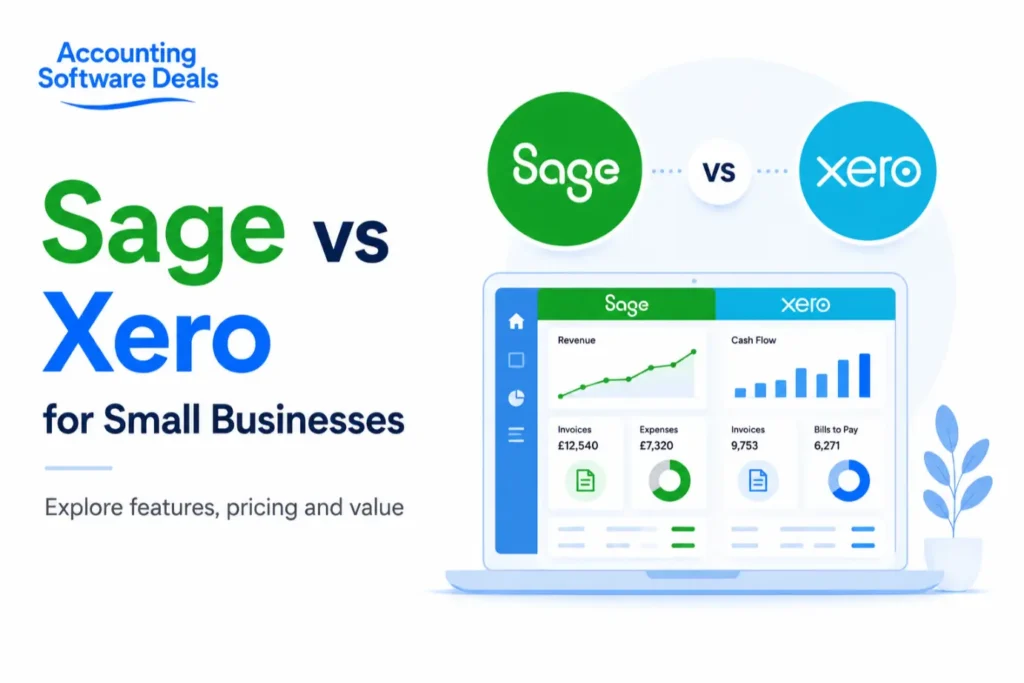 Introduction Choosing between Xero vs Sage is one of the biggest decisions UK business owners make when selecting accounting software. Whether you’re comparing Xero or Sage, looking at Xero vs Sage features, or wondering is Xero better than Sage or is Sage better than Xero, this guide compares pricing, ease of use, HMRC compliance, integrations… Read more: Xero vs Sage: Which Accounting Software Is Best for Small Businesses?
 - Free Agent Accounting Software Review
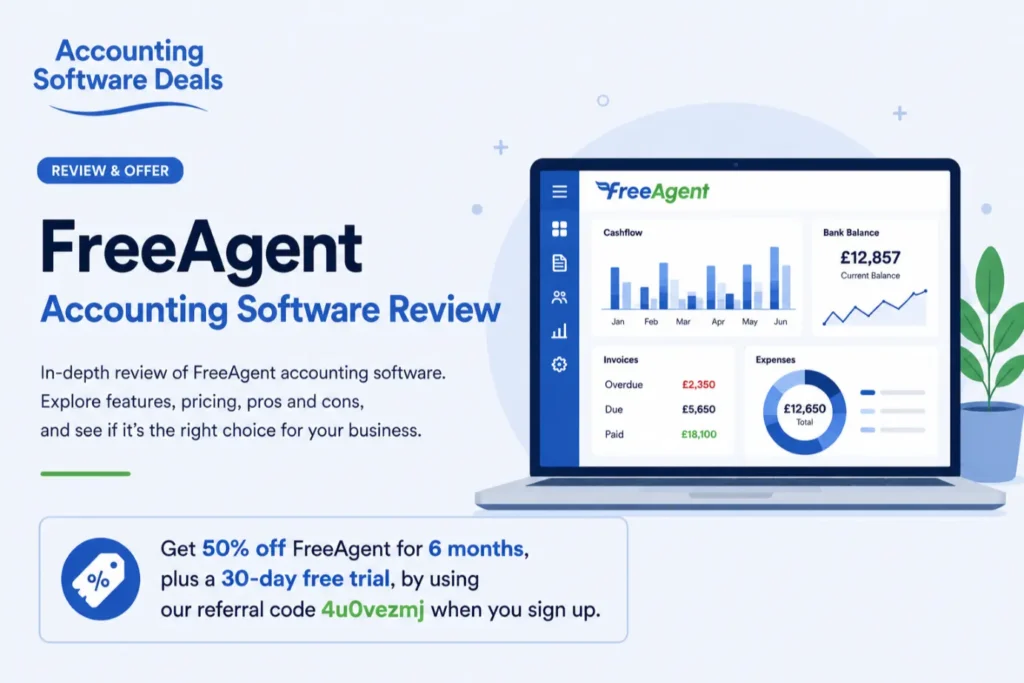 Introduction Choosing the right accounting software can save you hours of administration each month while helping you stay compliant with HMRC requirements. For UK freelancers, sole traders and small businesses, FreeAgent accounting software has become one of the most popular cloud accounting solutions thanks to its simple interface, built-in tax features and time-saving automation. In… Read more: Free Agent Accounting Software Review
 - Zoho Books Accounting Software Review UK (2026)
 Introduction Choosing the right accounting software is one of the most important decisions for any business, and Zoho Books accounting software has become an increasingly popular choice for freelancers, sole traders, startups and small businesses looking for an affordable cloud-based solution. Combining invoicing, bookkeeping, expense tracking, automation and HMRC-compliant tax tools, Zoho Books is designed… Read more: Zoho Books Accounting Software Review UK (2026)
 - Xero vs Zoho Books for Small Businesses (2026)
 Introduction Choosing accounting software is one of the most important decisions a sole trader or small business owner can make. The right platform saves time, reduces stress around tax, and gives you clearer insight into cash flow and profitability. The wrong one can feel restrictive, confusing, or unnecessarily expensive as your business grows. That’s why… Read more: Xero vs Zoho Books for Small Businesses (2026)
 - Zoho Books vs Sage for Small Businesses (2026 Comparison Guide)
 Introduction Choosing the right accounting software is one of the most important decisions for any UK sole trader or small business. The right platform can save hours of administration every month, simplify VAT returns, improve cash flow management and provide better visibility over your finances as your business grows. If you’re comparing Zoho Books vs… Read more: Zoho Books vs Sage for Small Businesses (2026 Comparison Guide)
 - Sage vs QuickBooks Accounting Software Comparison
 Introduction Choosing between Sage and QuickBooks is one of the most important software decisions facing UK sole traders and small businesses. Both platforms are HMRC-recognised, Making Tax Digital (MTD) compliant and trusted by thousands of UK businesses, but they take noticeably different approaches to bookkeeping, automation and financial management. Sage has traditionally been the preferred… Read more: Sage vs QuickBooks Accounting Software Comparison